

Frozen chicken feet and paws are important products in international poultry trading, particularly in markets where they have established culinary and foodservice demand. For importers, wholesalers and distributors, the sourcing process involves much more than finding a supplier with an attractive price. Buyers need to understand origin countries, product specifications, quality, packaging, cold-chain logistics, shipping, documentation and destination-market requirements. What countries export frozen chicken feet and paws
If you are researching what countries export frozen chicken feet and paws, Brazil is one of the major poultry-producing origins that international buyers may investigate. Other countries can also participate in the global chicken-feet trade, depending on production capacity, domestic demand, export infrastructure and destination-market access.
For buyers specifically researching Brazilian poultry, Chicken Paws Brazil provides a focused online resource for frozen chicken paws and related poultry products.
International buyers can also research Brazilian agricultural and poultry businesses such as Aurora Alimentos, Coopavel, Vibra Agroindustrial, Bello Alimentos, Lar Cooperativa Agroindustrial and Zanchetta Alimentos as part of their supplier research.
Important: A supplier website or product listing should not be considered proof that a specific product is currently available or that a particular processing establishment is approved for your destination. Importers should independently verify legal identity, product availability, export eligibility and destination-market requirements before purchasing.
What Countries Export Frozen Chicken Feet and Paws?
Countries that participate in international poultry trade can potentially export chicken feet and paws, but the list of countries from which an importer can legally purchase depends on the destination market’s rules.
Brazil is an important country for buyers researching frozen poultry exports because of its large poultry industry, established meat-processing sector and international cold-chain infrastructure.
Other poultry-producing countries that may participate in chicken-feet or chicken-paws trade include countries in Asia and other regions with significant poultry-processing industries. However, commercial availability and export eligibility can change, and a country that produces chicken does not necessarily have unrestricted access to every destination market.
For an importer, the more useful question is:
Which countries and specific processing establishments are currently approved to export frozen chicken feet to my destination?
That distinction is extremely important.
Why Brazil attracts frozen poultry importers
Brazil offers several characteristics that can make it attractive for international poultry buyers:
- Large poultry production.
- Extensive agricultural supply chains.
- Established meat-processing infrastructure.
- International export experience.
- Developed refrigerated logistics.
- Multiple poultry products.
- Access to major ports.
- Potential for recurring commercial supply.
Buyers should nevertheless evaluate the individual exporter and processing establishment rather than relying only on the country of origin.
Which Countries Are Major Poultry Exporters?
International poultry trade includes major producers and exporters across several regions.
Potential sourcing origins can include:
- Brazil
- United States
- European poultry-producing countries
- Thailand
- China, subject to destination-market rules
- Other poultry-producing countries in Asia
- Selected countries in Latin America
However, chicken feet availability is different from total chicken-meat export capacity.
A country may export large quantities of chicken breast or whole chicken while having limited commercial availability of chicken feet for a particular destination.
Therefore, buyers should research both:
- The country’s poultry export capacity.
- The specific chicken-feet export eligibility and availability. What countries export frozen chicken feet and paws
Why Is Brazil an Important Origin for Frozen Chicken Feet?
Brazil has developed an extensive poultry production and processing industry. Its agricultural sector supports large-scale commercial food production, while its export infrastructure connects Brazilian suppliers with international markets.
For importers, Brazil can be attractive when searching for:
- Frozen chicken paws.
- Frozen chicken feet.
- Whole frozen chicken.
- Chicken wings.
- Chicken leg quarters.
- Chicken breast.
- Chicken mid-joint wings.
- Chicken offal and other poultry products.
For example, buyers can explore Whole Frozen Chicken and Frozen Whole Chicken when considering a broader poultry sourcing program.
How to Find the Best Frozen Chicken Feet Suppliers
The best frozen chicken feet supplier is not necessarily the company with the cheapest quotation.
A reliable supplier should be evaluated according to:
Product quality
Does the product match the required specification?
Consistency
Can the supplier provide the same specification repeatedly?
Export capability
Does the company understand international frozen-food shipping?
Documentation
Can the exporter provide the documents required for the destination?
Processing establishment
Can the buyer identify and verify the establishment responsible for processing?
Packaging
Is the packaging suitable for international frozen transportation?
Cold chain
Can the supplier maintain appropriate frozen conditions through loading and transportation?
Communication
Does the export team respond clearly and professionally?
Commercial terms
Are price, Incoterm, MOQ and payment conditions transparent?
Brazilian Frozen Chicken Supplier Research
Importers researching Brazilian poultry can investigate a range of companies and cooperatives.
Aurora Alimentos
Aurora Alimentos can be investigated as part of Brazilian agricultural and food-industry supplier research.
Before making a purchase inquiry, confirm the company’s current frozen poultry portfolio, relevant processing establishment and export eligibility for your market.
Coopavel
Coopavel is another Brazilian agricultural cooperative that buyers can research when evaluating potential poultry supply sources.
Confirm the specific products available and whether the relevant establishment meets your destination’s requirements.
Vibra Agroindustrial
Vibra Agroindustrial can also be included in a broader Brazilian poultry supplier research program.
As with every potential exporter, buyers should verify current product availability and applicable export approvals.
Bello Alimentos
Bello Alimentos is another business that buyers can research when developing a Brazilian poultry supplier shortlist.
Lar Cooperativa Agroindustrial
Importers can research Lar Cooperativa Agroindustrial as part of their evaluation of Brazilian agricultural and food supply chains.
Zanchetta Alimentos
Buyers can also investigate Zanchetta Alimentos when researching Brazilian meat suppliers.
The important point is to verify the specific product, processing facility and destination eligibility rather than assuming that every company listed online supplies every poultry product.
How to Import Frozen Chicken Feet
Importing frozen chicken feet generally involves several stages.
Step 1: Research destination regulations
Before contacting suppliers, determine whether your country permits imports of frozen chicken feet and which requirements apply.
Step 2: Find eligible suppliers
Identify exporters that can supply your required product and are eligible for your destination.
Step 3: Request specifications
Ask for the product specification, grade, size, processing method and packaging information.
Step 4: Request quotations
Ask for FOB, CFR or CIF pricing as appropriate.
Step 5: Verify documentation
Confirm which veterinary, sanitary, commercial and customs documents the exporter can provide.
Step 6: Agree on contract terms
Confirm quantity, price, specification, Incoterm, payment terms, shipment schedule and claims procedure.
Step 7: Arrange transportation
Frozen chicken feet normally require temperature-controlled transportation.
Step 8: Complete import clearance
Work with the relevant customs and veterinary authorities or qualified brokers.
Step 9: Move the shipment to cold storage
Ensure that suitable frozen storage is available immediately after clearance.
Step 10: Distribute to customers
Once cleared and safely stored, the product can enter the importer’s wholesale distribution network.
Frozen Chicken Feet Import Requirements
Import requirements differ substantially between countries.
Depending on the destination, importers may need:
- Import permits.
- Foreign-establishment approval.
- Veterinary health certificates.
- Commercial invoices.
- Packing lists.
- Bills of lading.
- Certificates of origin.
- Customs declarations.
- Product labeling.
- Food-safety documentation.
- Halal certification where applicable.
- Additional sanitary certificates.
Why establishment approval matters
Many countries regulate imports of animal-origin foods using approved foreign establishments.
Consequently, it is not enough to know that Brazil exports poultry. You need to establish whether the specific processing establishment and product are eligible for your destination.
How to Verify a Frozen Chicken Feet Exporter
Before placing a large order, conduct supplier due diligence.
Verify the legal entity
Check the company’s full legal name and registration information.
Verify the processing facility
Ask where the chicken feet are processed.
Verify export eligibility
Confirm that the establishment and product meet your destination’s requirements.
Verify documents
Request copies or examples of relevant documentation where commercially appropriate.
Verify product specifications
Make sure the specification corresponds to your customers’ requirements.
Verify bank details
For commercial transactions, independently verify payment instructions and ensure they correspond to the contracted legal entity.
Verify logistics
Ask how the supplier handles frozen storage, loading and reefer transportation.
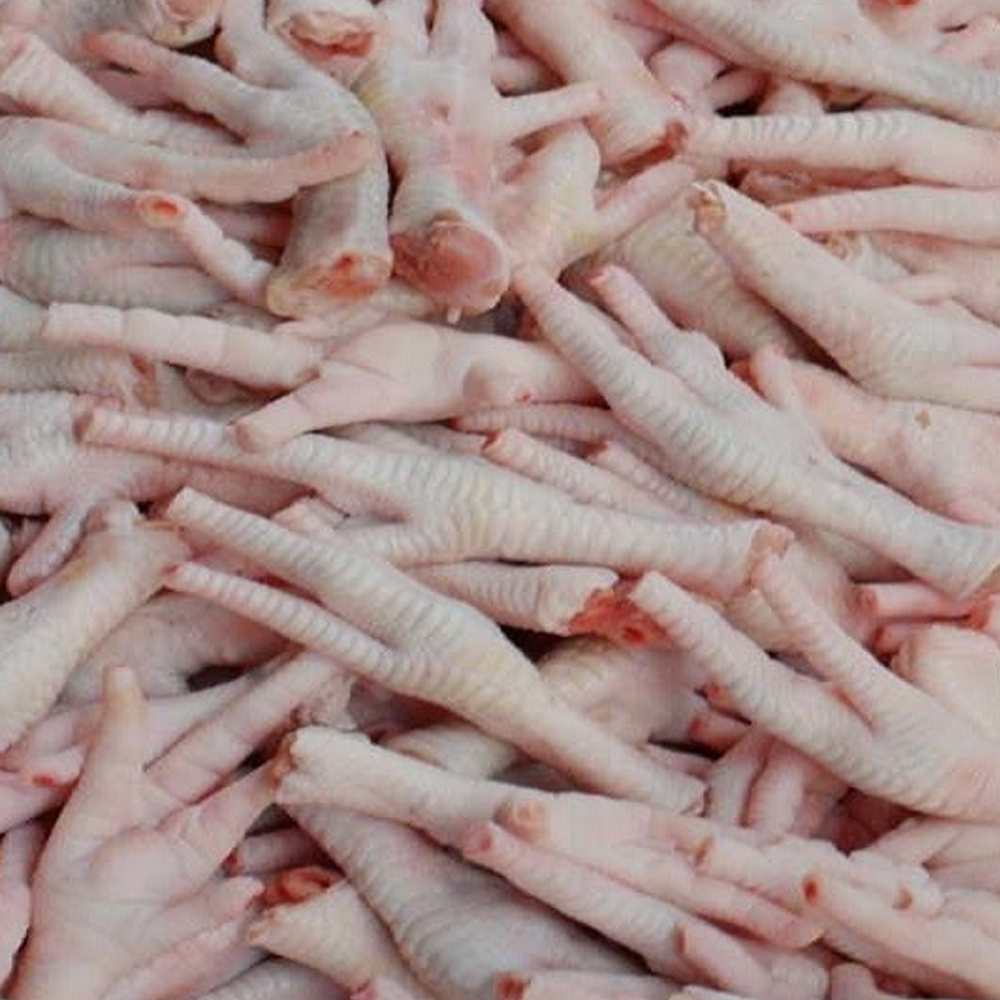
Frozen Chicken Feet Quality Specifications
A professional buyer should never purchase frozen chicken feet based only on a product name.
The specification should address factors such as:
- Product type.
- Grade.
- Size.
- Average weight.
- Cleaning.
- Processing.
- Skin condition.
- Nail condition.
- Foreign-material control.
- Freezing condition.
- Packaging.
- Labeling.
- Production date.
- Shelf life.
Grade specifications
“Grade A,” “premium” or similar descriptions should be clearly defined by the supplier.
Different suppliers may use different commercial grading systems.
Therefore, ask for the actual characteristics behind the grade.
Frozen Chicken Feet Packaging
Packaging is particularly important for international shipments because the product can travel thousands of kilometers before reaching the buyer.
Typical bulk export packaging may involve:
- Inner plastic bags.
- Export cartons.
- Palletized cartons.
- Protective wrapping.
- Product identification labels.
The importer should request exact information about:
Carton weight
Confirm net and gross weight.
Carton dimensions
Dimensions affect container utilization.
Bags per carton
This can be important for warehouse and customer handling.
Pallet configuration
Confirm cartons per pallet and total pallet weight.
Container loading
Request a loading plan for the specific product and packaging.
How Many Cartons Fit in a Reefer Container?
There is no universal answer.
Container loading depends on:
- Carton size.
- Carton weight.
- Palletization.
- Reefer-container dimensions.
- Maximum cargo weight.
- Destination transport restrictions.
- Shipping-line limitations.
A supplier should calculate the expected loading quantity based on the actual product packaging.
A basic calculation is:
Cartons × net weight per carton = total net product weight
For logistics planning, gross weight must also be considered. What countries export frozen chicken feet and paws
Frozen Chicken Feet Shipping Guide
International shipping requires appropriate temperature-controlled logistics.
The supply chain can include:
Processing plant → cold storage → inland refrigerated transport → port → reefer container → destination port → customs → cold storage → wholesale distribution
Reefer container
A reefer container is designed to maintain temperature-controlled conditions during ocean transportation.
Before shipment, confirm:
- Container type.
- Loading configuration.
- Temperature requirement.
- Reefer settings.
- Port of loading.
- Destination port.
- Transit time.
- Shipping schedule.
- Documentation deadline.
The supplier and logistics provider should coordinate loading and vessel arrangements.
How to Choose a Shipping Port
Brazil has multiple ports and logistics corridors.
The most suitable loading point depends on:
- Location of the processing facility.
- Supplier’s export arrangements.
- Vessel availability.
- Destination.
- Freight rates.
- Transit time.
- Port congestion.
- Reefer availability.
Do not automatically choose the port with the lowest advertised freight. Compare the entire logistics route.
Frozen Chicken Feet Wholesale Pricing
Wholesale prices fluctuate.
Factors include:
- Origin.
- Product grade.
- Size.
- Availability.
- Order volume.
- Packaging.
- Production date.
- Freight.
- Currency.
- Incoterm.
- Destination.
- Import duties.
- Seasonal supply and demand.
Why online prices can be misleading
An online price may not specify:
- Grade.
- Packaging.
- MOQ.
- Incoterm.
- Destination.
- Freight.
- Production date.
Therefore, importers should request a current commercial quotation based on their exact requirements.
How to Compare Frozen Chicken Feet Suppliers
Use a structured comparison.
| Criteria | Supplier A | Supplier B | Supplier C |
|---|---|---|---|
| Product specification | Confirm | Confirm | Confirm |
| Grade | Confirm | Confirm | Confirm |
| Size | Confirm | Confirm | Confirm |
| Carton weight | Confirm | Confirm | Confirm |
| Shelf life | Confirm | Confirm | Confirm |
| Documentation | Confirm | Confirm | Confirm |
| Destination approval | Verify | Verify | Verify |
| MOQ | Compare | Compare | Compare |
| Price basis | FOB | CIF | FOB |
| Freight | Separate | Included | Separate |
| Lead time | Compare | Compare | Compare |
This prevents buyers from selecting a supplier based on a single number.
FOB vs CIF Frozen Chicken Feet
FOB
FOB is useful when the importer wants to arrange the main ocean freight independently.
CIF
CIF can simplify purchasing because cost, insurance and freight to the named destination port are included, subject to the applicable Incoterms rules.
Which is cheaper?
There is no universal answer.
A supplier with the lowest FOB price may not produce the lowest landed cost after freight, insurance and destination charges.
Always compare:
Product + freight + insurance + customs + port charges + clearance + inland transportation + cold storage.
Frozen Chicken Feet Shelf Life
The declared shelf life depends on the product, processing, packaging and storage conditions.
The importer should request:
- Production date.
- Expiry/best-before date.
- Declared shelf life.
- Remaining shelf life at shipment.
- Storage conditions.
- Batch number.
- Label information.
Why production date matters
If a shipment spends significant time in production scheduling, port handling and ocean transit, the remaining shelf life can be reduced before it reaches the importer’s warehouse.
For large commercial purchases, buyers may specify a minimum remaining shelf life at shipment.
Frozen Chicken Feet for Wholesale Distribution
After import clearance, the product may be distributed to:
- Meat wholesalers.
- Frozen-food distributors.
- Restaurants.
- Foodservice companies.
- Supermarkets.
- Specialty food retailers.
- Catering companies.
- Regional distributors.
Before importing, calculate expected demand.
A simple planning formula is:
Average monthly sales × inventory coverage period = target inventory
Then add an appropriate safety margin based on your logistics and customer requirements.
Importing Chicken Feet Into Different Markets
China
China has detailed requirements for animal-origin food imports. Buyers must verify approved origins, establishments, product requirements and current customs/veterinary rules before ordering.
Hong Kong
Importers should check the applicable food and animal-product requirements and documentation.
South Korea
Korean import requirements should be verified before purchasing, including establishment eligibility and required certificates.
Japan
Japanese food and animal-product import rules should be reviewed with the relevant authorities.
United States
U.S. importers should verify USDA/APHIS and FSIS requirements applicable to the product and origin, together with customs requirements.
European Union
EU importers should verify current requirements concerning approved establishments, veterinary documentation, border controls and applicable sanitary rules.
Africa
African import requirements vary substantially by country. Buyers should check their national veterinary, customs and food-safety requirements before ordering.
The important principle is simple: never assume that approval for one destination automatically applies to another.
Why Importers Should Diversify Their Frozen Poultry Portfolio
An importer sourcing chicken feet may benefit from investigating additional products.
A supplier relationship can potentially support procurement of several poultry cuts, depending on availability and destination eligibility.
Whole Frozen Chicken
Buyers can explore Whole Frozen Chicken as an additional poultry product.
Frozen Whole Chicken
Importers can also investigate Frozen Whole Chicken.
Frozen Mid-Joint Wing
Foodservice distributors looking for different chicken-wing specifications can research Frozen Mid-Joint Wing.
Diversifying the product range can help importers serve different customer segments and reduce dependence on a single frozen product.
Expanding Into Frozen Pork Products
International meat distributors may also investigate Brazilian frozen pork products.
Potential products include:
Frozen Pork Loin Ribs
Explore Frozen Pork Loin Ribs.
Frozen Pork Rind
Buyers can research Frozen Pork Rind.
Frozen Pork Shoulder
For larger pork cuts, investigate Frozen Pork Shoulder.
Frozen Pork Tongue
Specialty-meat distributors can research Frozen Pork Tongue.
Frozen Pork Trimming
Buyers seeking processing-oriented pork products can also investigate Frozen Pork Trimming.
Common Mistakes When Importing Frozen Chicken Feet
1. Choosing a supplier based only on price
Price must be evaluated alongside specification and landed cost.
2. Not checking destination approval
Always verify the specific establishment and product.
3. Failing to define grade
A vague quality description can lead to disputes.
4. Ignoring packaging details
Incorrect assumptions about carton weights can affect container planning.
5. Forgetting cold-storage costs
Frozen inventory requires suitable storage after arrival.
6. Not calculating landed cost
Freight and import charges can materially change the final price.
7. Failing to verify payment details
Large international transactions require appropriate due diligence.
8. Not confirming production dates
Remaining shelf life matters for international distribution.
9. Comparing FOB and CIF directly
Different Incoterms include different costs.
10. Ordering too much
Excess inventory can create storage and cash-flow pressure.
How to Build a Long-Term Frozen Chicken Feet Supply Chain
For distributors with established demand, long-term procurement may be more effective than repeated spot purchases.
A supply relationship can include:
- Agreed product specification.
- Defined grade.
- Standard packaging.
- Regular quantity.
- Production schedule.
- Shipment schedule.
- Price mechanism.
- Documentation requirements.
- Minimum shelf life.
- Inspection arrangements.
- Claims procedures.
Measure supplier performance
After each shipment, record:
- Quantity received.
- Product quality.
- Packaging condition.
- Documentation accuracy.
- Delivery performance.
- Cold-chain performance.
- Customer feedback.
- Claims.
- Actual landed cost.
This information helps identify the strongest suppliers over time.
Professional Frozen Chicken Feet Import Checklist
Before placing an order, confirm:
☐ Supplier legal identity
☐ Processing establishment
☐ Destination eligibility
☐ Product specification
☐ Grade
☐ Size
☐ Cleaning requirements
☐ Packaging
☐ Carton net weight
☐ Carton gross weight
☐ Carton dimensions
☐ Pallet configuration
☐ Container loading plan
☐ Production date
☐ Shelf life
☐ Storage conditions
☐ Price
☐ Currency
☐ Incoterm
☐ Port of loading
☐ Destination port
☐ Freight
☐ Import permit
☐ Veterinary certificate
☐ Certificate of origin
☐ Customs documents
☐ Label requirements
☐ Payment terms
☐ Production lead time
☐ Inspection arrangements
☐ Claims procedure
FAQ: What Countries Export Frozen Chicken Feet and Paws?
What countries export frozen chicken feet and paws?
Brazil is an important poultry-producing and exporting country that buyers may investigate for frozen chicken feet and paws. Other poultry-producing countries can also participate in the trade, depending on destination-market eligibility, commercial availability and export regulations.
Is Brazil a good country to source frozen chicken feet?
Brazil is an important origin for international poultry sourcing because of its large poultry industry and established export infrastructure. Buyers should still verify the individual supplier, product and processing establishment.
Where can I buy frozen chicken feet wholesale?
You can investigate direct poultry exporters, meat-processing companies, international frozen-food traders and specialized distributors. Chicken Paws Brazil is one online resource buyers can use when researching Brazilian frozen chicken paws.
What should I ask a chicken feet supplier?
Ask for the product specification, grade, size, cleaning requirements, packaging, carton weight, production date, shelf life, available quantity, certificates, price, Incoterm, port of loading and lead time.
How do I know whether a supplier is reliable?
Verify its legal identity, processing establishment, export eligibility, documentation, product specifications, commercial references where available and ability to maintain consistent supply.
What documents are needed to import frozen chicken feet?
Requirements vary by country but can include import permits, veterinary certificates, commercial invoices, packing lists, bills of lading, certificates of origin and other sanitary or customs documents.
Can I import frozen chicken feet by reefer container?
Yes. Commercial frozen poultry shipments can be transported using refrigerated containers. The exact loading quantity depends on packaging, container capacity and applicable weight limits.
How many cartons fit in a reefer container?
There is no universal number. The quantity depends on carton dimensions, carton weight, palletization and the container’s allowable cargo weight.
What affects frozen chicken feet prices?
Origin, grade, size, supply, quantity, packaging, freight, currency, Incoterms, destination and import costs can all affect the final price.
Is CIF better than FOB?
Neither is automatically better. The correct choice depends on the importer’s logistics strategy. Compare the complete landed cost rather than the quoted product price alone.
Can I request a specific grade?
Yes. Buyers should clearly define the required quality grade and ask the exporter to provide its written definition.
Can I request a particular size?
If the exporter has the required specification available, buyers can request a particular size or weight range. Confirm availability before signing the purchase contract.
How should frozen chicken feet be packaged?
Packaging depends on the exporter and market specification. Commercial bulk products can be supplied in export cartons with inner bags or other appropriate packaging. Confirm exact carton and pallet details before purchasing.
How long can frozen chicken feet be stored?
The declared shelf life depends on the product, packaging and storage conditions. Buyers should follow the supplier’s specification and applicable food regulations.
Do chicken feet require cold storage after arrival?
Yes. Frozen poultry must be maintained under appropriate frozen-storage conditions according to the product specification and applicable regulations.
Can I import chicken feet and other poultry products together?
Potentially, depending on supplier availability, product eligibility, container-loading requirements and destination regulations. Buyers can investigate products such as Frozen Mid-Joint Wing and whole frozen chicken.
Can I buy frozen pork products as well?
Depending on supplier availability and export eligibility, importers can investigate pork products such as Frozen Pork Loin Ribs, Frozen Pork Shoulder and Frozen Pork Tongue.
What is the best way to compare international chicken feet suppliers?
Send the same detailed specification to several suppliers and compare product quality, grade, price, Incoterm, freight, documentation, lead time, packaging and total landed cost.
Should I verify the exporter before making payment?
Yes. For substantial international transactions, appropriate commercial due diligence should be completed before funds are transferred.
Final Thoughts: Finding the Best Frozen Chicken Feet Suppliers
If you are researching what countries export frozen chicken feet and paws, Brazil deserves consideration because of its established poultry-production and export infrastructure. However, successful international sourcing depends on much more than choosing a country.
The right supplier should be evaluated on product quality, specification, processing establishment, destination eligibility, documentation, packaging, cold-chain capability, shipping performance and total landed cost.
For buyers researching Brazilian frozen poultry, start with Chicken Paws Brazil and investigate relevant businesses including Aurora Alimentos, Coopavel, Vibra Agroindustrial, Bello Alimentos, Lar Cooperativa Agroindustrial and Zanchetta Alimentos.
Importers should also consider building a broader product portfolio. Frozen poultry options include Whole Frozen Chicken, Frozen Whole Chicken and Frozen Mid-Joint Wing.
For frozen pork distribution, buyers can explore Frozen Pork Loin Ribs, Frozen Pork Rind, Frozen Pork Shoulder, Frozen Pork Tongue and Frozen Pork Trimming.
Ultimately, the most effective international buying strategy is to verify the supplier, confirm the product specification, check destination-market eligibility, compare like-for-like quotations, calculate the complete landed cost and protect the cold chain from origin to destination. This gives importers a much stronger foundation for purchasing frozen chicken feet and paws in bulk and developing a sustainable wholesale distribution business.