

For importers, wholesalers, distributors, food processors and traders, knowing how much frozen chicken feet cost per metric ton is one of the first steps toward building a profitable international purchasing strategy. Frozen chicken feet and chicken paws are widely traded poultry products, particularly in markets where they are used in traditional cuisine, foodservice, processing and further-value applications.
However, the price per metric ton is rarely a single fixed number. A buyer requesting a container of frozen chicken feet may receive different quotations depending on origin, product specification, grade, cleaning standard, packaging, order quantity, season, destination, shipping conditions, payment terms and whether the quotation is FOB, CFR or CIF.
For buyers looking for an established starting point, Chicken Paws Brazil provides a dedicated source of information about frozen chicken feet, paws and other Brazilian frozen meat products.
This guide explains how to evaluate the cost of frozen chicken feet per metric ton, what international buyers should check before ordering, how to identify reliable exporters, and how to prepare a professional container-order request.
How Much Does Frozen Chicken Feet Cost Per Metric Ton?
The short answer is that frozen chicken feet can vary significantly in price per metric ton, so international buyers should not rely on a single market number without defining the product and commercial terms.
A realistic wholesale quotation normally depends on several variables:
- Product origin
- Chicken feet or paws specification
- Grade and quality
- Average size
- Cleaning and processing requirements
- Skin and nail condition
- Freezing method
- Packaging
- Carton weight
- Minimum order quantity
- Number of containers
- Destination port
- Freight rates
- Incoterms
- Payment conditions
- Export documentation
- Market supply and demand
For this reason, a buyer comparing two quotations should make sure that both offers describe substantially the same product.
For example, a quotation of US$X per metric ton FOB cannot be directly compared with a US$Y per metric ton CIF quotation until freight, insurance and other applicable costs are considered.
A simple frozen chicken feet price calculation
If a supplier quotes:
Price per metric ton × quantity = product value
For example, if the agreed commercial price were US$1,000 per metric ton and the buyer purchased 20 metric tons:
US$1,000 × 20 = US$20,000
This is only an example for calculation purposes, not a current market quotation.
The final landed cost can be higher after adding freight, insurance, customs duties, port charges, inspection fees, clearance, storage and inland transportation.
Therefore, professional importers should ask suppliers for both:
Product price: FOB/CFR/CIF as applicable
and
Estimated landed cost: product + logistics + destination costs.
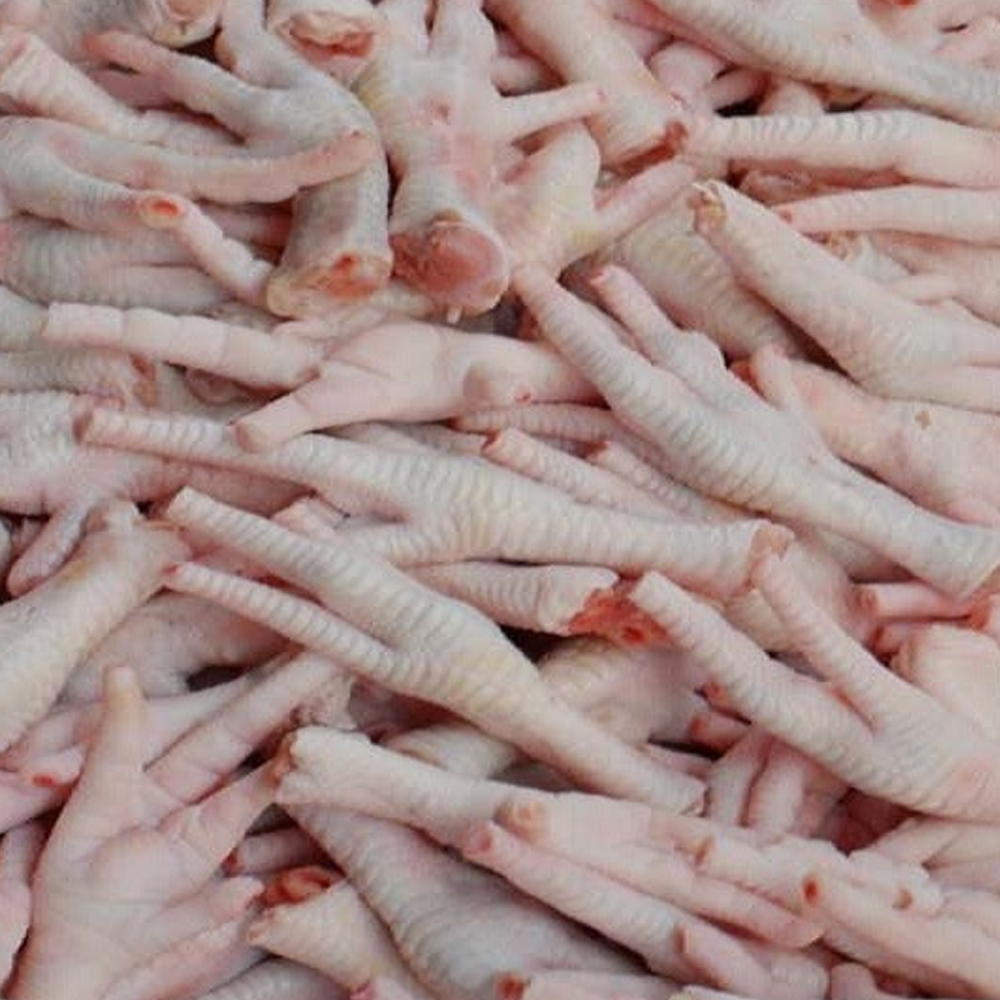
What Determines Frozen Chicken Feet Price Per Ton?
Understanding the price drivers is more useful than simply searching for the cheapest supplier.
1. Country of origin
Origin can influence production costs, processing infrastructure, export logistics, regulatory requirements and freight competitiveness.
Brazil is an important country for international poultry trade, and buyers investigating Brazilian suppliers can review supplier information through Aurora Alimentos, Coopavel Cooperativa Agroindustrial, Vibra Agroindustrial, Bello Alimentos, Lar Cooperativa Agroindustrial and Zanchetta Alimentos.
A supplier’s country of origin should never be treated as a substitute for verification. Buyers should confirm the exact exporting company, processing establishment, product availability and destination-market eligibility before making payment.
2. Product specification
Chicken feet and chicken paws are not necessarily identical commercial specifications.
Depending on the destination market, buyers may request specifications covering:
- Foot size
- Weight range
- Skin condition
- Nail condition
- Cleaning
- Yellow skin
- Whitening
- Removal of unwanted material
- Foreign-matter tolerance
- Broken pieces
- Blood spots
- Bruising
- Freezing condition
- Carton configuration
A supplier should provide a written specification before the purchase contract is finalized.
3. Quality grade
Quality can have a substantial impact on pricing.
A buyer looking for premium export-grade chicken paws may have stricter requirements than a buyer purchasing lower-specification product for processing.
Before ordering, ask the supplier:
- What grade is offered?
- What is the size range?
- What is the acceptable defect percentage?
- Are nails removed?
- Is the product washed?
- Is the product individually frozen or block frozen?
- What is the permitted glazing percentage?
- What is the packaging format?
- What is the net weight per carton?
These questions can prevent a cheap quotation from becoming an expensive purchasing mistake.
Chicken Feet vs Chicken Paws: What Should Buyers Order?
International terminology can vary.
Some markets commonly use chicken feet, while others use chicken paws. Buyers should therefore avoid relying solely on the product name. How much does frozen chicken feet cost per metric ton
Instead, provide the supplier with a detailed specification.
For example:
Product: Frozen chicken feet/paws
Origin: Brazil
Packing: Export carton
Net weight: Buyer-specified
Freezing: Frozen
Grade: Buyer-specified
Size: Buyer-specified
Quantity: Container order
Destination: Buyer port
Incoterm: FOB/CFR/CIF
Required documents: As applicable to destination country
Buyers can compare the dedicated product pages for frozen chicken feet and frozen chicken paws when evaluating product categories and preparing purchasing requirements.
Frozen Chicken Paws Suppliers: What International Buyers Should Check Before Ordering
Finding a supplier is easy. Finding a supplier that can consistently deliver the exact product specification is much more important.
Before placing a container order, international buyers should perform supplier due diligence.
Verify the company’s identity
Request:
- Full legal company name
- Registered business address
- Export registration details
- Processing establishment information
- Contact information
- Commercial invoice details
- Bank information
- Export experience
- Destination markets served
The company receiving payment should match the contractual seller unless there is a clearly documented reason for another entity to receive funds.
Verify processing establishment details
For animal-origin products, the processing establishment is particularly important.
Depending on the destination market, buyers may need confirmation of:
- Official establishment number
- Veterinary inspection
- Export eligibility
- Health certification
- Destination-country approval
- Halal certification where required
- HACCP or equivalent food-safety systems
- Traceability systems
Do not assume that because a supplier advertises a product online, the product is automatically approved for import into every country. How much does frozen chicken feet cost per metric ton
Check destination-country eligibility
A frozen chicken feet supplier may export to one country but not necessarily to every destination.
The buyer should verify:
- Is the exporting country approved?
- Is the processing establishment approved?
- Is the product permitted?
- Are there animal-health restrictions?
- Are there additional veterinary requirements?
- Does the importer require a specific permit?
- Are there labeling requirements?
- Are there inspection requirements?
The importer should work with the relevant veterinary, food-safety, customs and import authorities in the destination country.
How to Find Reliable Frozen Chicken Feet Exporters for Container Orders
Container purchasing requires a different approach from buying a few cartons.
A reliable exporter should be able to explain:
- Minimum order quantity
- Container loading capacity
- Packaging
- Production lead time
- Available stock
- Production schedule
- Port of loading
- Incoterm
- Payment terms
- Documentation
- Product specifications
- Inspection procedures
Search for suppliers with relevant export experience
A supplier experienced in international container shipments is generally better positioned to explain the documentation and logistics involved.
Potential buyers researching Brazilian frozen poultry suppliers can explore:
- Aurora Alimentos
- Coopavel
- Vibra Agroindustrial
- Bello Alimentos
- Lar Cooperativa Agroindustrial
- Zanchetta Alimentos
These links can help buyers research supplier and product information, but all commercial and regulatory details should be independently confirmed before contracting.
What Should Be Included in a Frozen Chicken Feet RFQ?
A professional RFQ helps suppliers provide comparable offers.
Your request should include:
Product: Frozen chicken feet/paws
Quantity: Example: 1 × 40-foot reefer or buyer’s required quantity
Destination: Exact port and country
Specification: Grade, size and cleaning requirements
Packaging: Required carton configuration
Incoterm: FOB, CFR or CIF
Payment: Preferred payment structure
Required documents: Commercial and export documentation according to destination requirements
Target shipment: Preferred shipping period
Inspection: Third-party inspection if required
A good RFQ reduces unnecessary back-and-forth and makes supplier comparisons much easier.
How Much Frozen Chicken Feet Fit in a Container?
Container loading quantities should never be assumed from a generic number.
The actual quantity depends on:
- Reefer container type
- Maximum permissible gross weight
- Carton dimensions
- Carton net weight
- Pallet configuration
- Destination road restrictions
- Shipping line limitations
- Exporter’s loading method
- Product density
- Required temperature
A supplier may quote a container quantity based on metric tons, cartons or pallets.
For example, if a buyer is purchasing 20 metric tons, the buyer should request:
Number of cartons = total net kilograms ÷ kilograms per carton
If each carton contains 20 kg net:
20,000 kg ÷ 20 kg = 1,000 cartons
Again, this is a mathematical example rather than a recommended container-loading quantity.
Always ask the exporter for a pro forma packing list showing cartons, net weight, gross weight, pallets if applicable and estimated container configuration. How much does frozen chicken feet cost per metric ton
Packaging Requirements for Frozen Chicken Feet
Packaging protects the product throughout freezing, storage and international transportation.
Common export packaging may include:
- Food-grade inner packaging
- Polybags
- Export cartons
- Printed cartons
- Plain cartons with labels
- Palletized cartons where appropriate
The buyer should specify:
- Net weight per carton
- Gross weight
- Carton dimensions
- Number of bags per carton
- Number of pieces per bag
- Label language
- Production date
- Best-before/expiry information where required
- Lot/batch identification
- Country of origin
- Establishment information
- Storage instructions
The final labeling format should comply with the destination country’s requirements.
Frozen Chicken Feet Quality Checklist
Before confirming a purchase, buyers should request a product specification sheet.
Important quality points include:
Appearance
The product should match the agreed specification and should not show unacceptable discoloration, contamination or excessive damage.
Cleaning
Cleaning requirements should be clearly defined.
Freezing
The buyer should confirm the required frozen storage condition and temperature throughout the supply chain.
Glazing
If glazed product is supplied, clarify the permitted glaze percentage because excessive glaze can distort the buyer’s perception of the real product yield.
Defects
Agree in advance on tolerances for:
- Broken feet
- Bruising
- Blood spots
- Discoloration
- Foreign material
- Missing parts
- Excessive skin damage
Sampling
For a new supplier, requesting samples or arranging an inspection can reduce risk before a full container commitment.
How to Compare Frozen Chicken Feet Suppliers
Do not rank suppliers solely according to price.
Create a comparison table using:
| Factor | Supplier A | Supplier B | Supplier C |
|---|---|---|---|
| Product | Chicken feet | Chicken paws | Chicken feet |
| Origin | Verified | Verified | Verified |
| Grade | Confirmed | Confirmed | Confirmed |
| Net carton weight | Confirmed | Confirmed | Confirmed |
| Price basis | FOB | CFR | CIF |
| MOQ | Confirmed | Confirmed | Confirmed |
| Port | Confirmed | Confirmed | Confirmed |
| Lead time | Confirmed | Confirmed | Confirmed |
| Documents | Confirmed | Confirmed | Confirmed |
| Inspection | Available | Available | Available |
| Destination approval | Verify | Verify | Verify |
This method makes the actual commercial difference between offers much easier to identify.
Frozen Chicken Feet Price: FOB vs CIF
One of the most common mistakes made by new importers is comparing different Incoterms as though they were the same.
FOB
Under an FOB quotation, the buyer typically becomes responsible for the main international freight and subsequent logistics according to the agreed Incoterm and contract.
CFR
CFR generally includes the cost and freight to the named destination port, but insurance is handled separately.
CIF
CIF generally includes cost, insurance and freight to the named destination port, subject to the precise contractual terms.
Therefore:
FOB price ≠ CIF price
If Supplier A offers a lower FOB price and Supplier B offers a higher CIF price, Supplier A is not automatically cheaper.
The buyer should calculate the estimated landed cost.
How to Calculate Landed Cost Per Metric Ton
A useful purchasing formula is:
Landed cost = Product cost + International freight + Insurance + Import duties/taxes + Port charges + Clearance + Inland transport + Other applicable costs
Then:
Landed cost per metric ton = Total landed cost ÷ total metric tons
For example, suppose:
- Product value = US$20,000
- Freight = US$4,000
- Insurance = US$200
- Other applicable costs = US$2,000
Total:
US$26,200
For 20 metric tons:
US$26,200 ÷ 20 = US$1,310 per metric ton
This example demonstrates why the lowest product quotation is not always the lowest landed cost.
Should Buyers Purchase Chicken Feet and Other Frozen Poultry Together?
Depending on the supplier and destination regulations, importers may also consider additional frozen poultry products.
For example, buyers may review:
A diversified frozen poultry portfolio can help wholesalers supply restaurants, foodservice companies, processors and retailers.
However, combining multiple products in one shipment can create additional complexity. Buyers must confirm that every product is permitted, correctly documented, appropriately labeled and accepted by the destination authorities.
Expanding Beyond Frozen Chicken Feet
International meat importers may also source other animal-protein products.
For buyers interested in expanding their product range, the frozen beef brisket category can be considered alongside frozen beef chuck, frozen beef neck, frozen beef ribs and frozen beef tenderloin.
For wholesalers, sourcing multiple meat categories from qualified exporters can potentially simplify purchasing and broaden the products available to downstream customers.
The important point is that each product should be evaluated independently for specifications, availability, destination eligibility and documentation.
How to Avoid Frozen Chicken Feet Import Problems
Many international purchasing problems occur because buyers focus on price before confirming the fundamentals.
Avoid these common mistakes.
Mistake 1: Choosing the cheapest quotation
A low price can be misleading if the specification is different.
Mistake 2: Not confirming Incoterms
FOB, CFR and CIF offers should not be compared without adjustment.
Mistake 3: Not checking the exporter
Verify the legal company, bank details and contractual entity.
Mistake 4: Not checking the processing establishment
For animal products, establishment eligibility can be critical.
Mistake 5: Ignoring packaging
Incorrect carton weight or dimensions can affect container planning.
Mistake 6: No written product specification
Verbal descriptions can cause disputes.
Mistake 7: No inspection strategy
For large first-time orders, independent inspection may provide additional assurance.
Mistake 8: Ignoring destination regulations
The importer remains responsible for understanding the rules applicable to the destination market.
Questions to Ask a Frozen Chicken Paws Supplier
Before ordering, ask the supplier:
- What is your current price per metric ton?
- Is the quotation FOB, CFR or CIF?
- What is the minimum order quantity?
- What is the recommended container configuration?
- What is the net weight per carton?
- What is the gross weight?
- What grade is available?
- What size range is available?
- Are the chicken feet or paws cleaned?
- What is the freezing method?
- What is the production lead time?
- What is the shelf-life specification?
- What documents will be provided?
- Is the processing plant eligible for my destination?
- Can you provide a product specification?
- Can you provide photographs or samples?
- What is the port of loading?
- What payment terms are available?
- Can third-party inspection be arranged?
- What is the estimated shipment schedule?
A supplier that answers these questions clearly is easier to evaluate than one that provides only a price.
Frozen Chicken Feet Import Documentation
Documentation varies by origin and destination, but international buyers commonly need commercial and shipping documentation such as:
- Commercial invoice
- Packing list
- Bill of lading
- Certificate of origin where applicable
- Veterinary or health certificate where required
- Export documentation
- Product specification
- Insurance documentation where applicable
- Import permit where required
- Inspection documentation where required
The exact requirements should be confirmed with the destination country’s competent authorities and the buyer’s customs broker.
Frozen Chicken Feet Storage and Cold Chain
Frozen poultry requires reliable temperature control.
The cold chain can involve:
Processing → Freezing → Cold storage → Reefer loading → Ocean transport → Destination port → Customs clearance → Cold storage → Distribution
A break in the cold chain can create quality and food-safety concerns.
Buyers should therefore confirm:
- Required storage temperature
- Reefer temperature settings
- Loading procedures
- Temperature monitoring
- Port handling
- Destination cold storage
- Inland refrigerated transport
The exact temperature specification should follow the product’s regulatory and contractual requirements.
How to Negotiate Frozen Chicken Feet Prices Per Metric Ton
Once buyers have comparable quotations, negotiation becomes more effective.
Instead of simply asking:
“Can you lower your price?”
ask:
“What is your best price for X metric tons under the following specification and Incoterm?”
Then provide:
- Quantity
- Product grade
- Packaging
- Destination
- Shipment period
- Incoterm
- Payment terms
- Required documentation
Larger volumes may provide greater negotiating leverage, but the supplier’s actual production capacity and market conditions also matter.
For repeat orders, buyers may negotiate a framework supply arrangement subject to agreed specifications, shipment schedules and pricing mechanisms.
Why Long-Term Supplier Relationships Matter
For wholesalers, consistency can be more valuable than obtaining the lowest price on a single shipment.
A reliable supplier relationship can improve:
- Product consistency
- Communication
- Shipment planning
- Forecasting
- Documentation
- Complaint resolution
- Repeat-order efficiency
- Volume negotiation
The best supplier is usually not simply the supplier offering the lowest price per metric ton. It is the supplier capable of delivering the agreed specification reliably and legally over time.
Frozen Chicken Feet Wholesale Buying Strategy
A professional importer can use a five-stage purchasing strategy.
Stage 1: Define demand
Determine:
- Monthly volume
- Target market
- Customer requirements
- Preferred packaging
- Storage capacity
- Distribution channels
Stage 2: Source suppliers
Contact several qualified exporters.
Stage 3: Compare quotations
Normalize all offers to the same Incoterm and specification.
Stage 4: Verify
Check company identity, product specification, establishment eligibility and documentation.
Stage 5: Order and inspect
Finalize the contract, shipping documentation and inspection procedure before loading.
This process can substantially reduce avoidable purchasing problems.
Is Frozen Chicken Feet a Good Wholesale Product?
The answer depends on the buyer’s market.
Frozen chicken feet can be commercially attractive where there is established demand from:
- Asian food distributors
- Restaurants
- Foodservice companies
- Meat wholesalers
- Processors
- Specialty retailers
- Importers
- Ethnic grocery distributors
However, demand should be researched locally before a buyer commits to a large container.
The buyer should understand:
- Customer preferences
- Required grade
- Preferred packaging
- Retail versus wholesale pricing
- Import duties
- Local competition
- Storage costs
- Distribution margins
A product can have a low international purchase price but still be unprofitable after destination costs.
FAQ: Frozen Chicken Feet Cost and Suppliers
How much does frozen chicken feet cost per metric ton?
There is no single universal price. Frozen chicken feet pricing changes according to origin, grade, specification, quantity, packaging, season, freight and Incoterms. Buyers should request a current quotation based on their exact specification and destination.
What is the difference between chicken feet and chicken paws?
The terminology varies by market and supplier. Buyers should focus on the detailed physical and processing specification rather than relying only on the product name.
How do I find reliable frozen chicken feet exporters?
Compare several exporters and verify their legal identity, processing establishment, export capability, product specification, destination eligibility, documentation and shipment experience.
How many metric tons fit in a reefer container?
There is no single universal quantity. Container loading depends on the reefer type, legal weight restrictions, carton dimensions, product density, palletization and shipping requirements. Ask the supplier for a detailed packing plan.
Should I buy FOB or CIF?
Neither is automatically better. FOB may provide more control over international freight, while CIF can simplify purchasing for some importers. Compare the total landed cost rather than only the quoted product price.
Can I request frozen chicken paws by specific size?
In many commercial transactions, buyers can request particular specifications, but availability depends on the supplier and production. Confirm the size range and tolerances in writing before ordering.
What documents do I need to import frozen chicken feet?
Requirements depend on the destination country. Typical documentation can include commercial invoices, packing lists, bills of lading, certificates of origin and veterinary or health documentation where required. Always confirm the exact requirements with local authorities and your customs broker.
Should I inspect a container before shipment?
For a first order, independent inspection can be useful, especially when purchasing significant quantities. Inspection requirements should be agreed with the supplier before production or loading.
How should frozen chicken feet be packaged?
Packaging should protect the product during storage and transport. Export cartons with food-grade inner packaging are common, but exact requirements should be agreed according to the destination market and buyer specification.
How can I calculate my real frozen chicken feet cost?
Use:
Landed cost = product + freight + insurance + duties/taxes + port charges + customs clearance + inland transport + other applicable costs.
Then divide the total cost by the metric tons received.
Can I purchase other frozen meat products from the same supplier?
Potentially, depending on supplier portfolio, availability, export eligibility and destination regulations. Buyers can also investigate frozen chicken breast, wings, whole chicken and beef products such as brisket, chuck, neck, ribs and tenderloin.
Final Checklist Before Ordering Frozen Chicken Feet
Before paying for a container, confirm:
- Supplier legal identity verified
- Processing establishment verified
- Destination eligibility confirmed
- Product specification received
- Grade confirmed
- Size confirmed
- Packaging confirmed
- Net and gross weights confirmed
- Price per metric ton confirmed
- Incoterm confirmed
- Destination port confirmed
- Freight calculated
- Import duties checked
- Required permits confirmed
- Veterinary/health documentation confirmed
- Production schedule confirmed
- Shelf-life requirements confirmed
- Inspection procedure agreed
- Payment terms confirmed
- Shipping schedule confirmed
Conclusion
Understanding how much frozen chicken feet cost per metric ton requires more than finding a number online. International buyers need to compare equivalent specifications, verify suppliers, understand Incoterms, calculate freight and landed costs, confirm destination-market requirements and ensure that the exporter can supply the required quality and quantity.
For buyers sourcing from Brazil, Chicken Paws Brazil can be used as a starting point for researching frozen chicken feet, chicken paws and related frozen meat products. Buyers can also investigate supplier information from Aurora Alimentos, Coopavel, Vibra Agroindustrial, Bello Alimentos, Lar Cooperativa Agroindustrial and Zanchetta Alimentos.
The strongest purchasing strategy is to request several comparable quotations, verify every important commercial and regulatory detail, calculate the complete landed cost per metric ton and then select the supplier offering the best combination of price, quality, reliability, documentation and delivery capability.
For a container buyer, the goal should not simply be to find the cheapest frozen chicken feet. The goal is to establish a dependable international supply chain that can support profitable wholesale distribution and repeat purchasing.