

Introduction: How Can I Find Reliable Frozen Chicken Paws Exporters from Brazil?
For importers, wholesalers, food distributors and international meat traders, finding reliable frozen chicken paws exporters from Brazil is an important step toward building a profitable poultry supply chain. Brazilian frozen chicken products are widely considered by buyers in international food markets, and chicken paws are a product of interest in destinations where there is established demand for poultry feet. How can I find reliable frozen chicken paws exporters from Brazil
However, buying chicken paws wholesale requires more than identifying a supplier with an attractive price. Importers must evaluate product quality, processing standards, packaging, cold-chain management, export documentation, shipping capability and destination-market requirements before placing a commercial order.
If you are searching for how can I find reliable frozen chicken paws exporters from Brazil, the most effective approach is to combine supplier research with careful product verification and a clear purchasing specification.
This guide explains how to source frozen chicken paws from Brazil, what to know about wholesale pricing, how to compare quality grades, which packaging details to request, how to verify exporters and what international importers should consider before arranging a shipment.
Buyers researching Brazilian poultry products can begin by visiting Chicken Paws Brazil, an online resource for frozen chicken products and chicken paws sourcing. Importers can also investigate agricultural and poultry companies such as Aurora Alimentos, Coopavel, Vibra Agroindustrial, Bello Alimentos, Lar Cooperativa Agroindustrial and Zanchetta Alimentos as part of their broader supplier research.
Important: The existence of a website or product listing does not, by itself, establish that a company is a verified exporter, that a particular establishment is approved for your destination or that a product is currently available. Buyers should independently confirm legal identity, export authorization, product eligibility and commercial terms.
1. Why Source Frozen Chicken Paws from Brazil?
Brazil is a major agricultural and poultry-producing country with established food-processing and international export infrastructure. This makes Brazil an important origin for buyers investigating frozen chicken paws, chicken feet and other poultry cuts.
For international importers, Brazilian sourcing may offer access to:
- Large-scale poultry production.
- A broad range of frozen chicken products.
- Experienced meat-processing businesses.
- International cold-chain logistics.
- Commercial export infrastructure.
- Different product specifications for foodservice and wholesale markets.
- Potential long-term supply relationships.
Nevertheless, not every Brazilian poultry company supplies chicken paws, and not every establishment is authorized to export every poultry product to every country. The buyer must verify the exact product and establishment.
What makes chicken paws commercially attractive?
Chicken paws are used in various food markets, including traditional cuisine, restaurants, foodservice and further food processing. Demand varies by country, product specification and local consumer preferences.
For wholesalers, the product may be attractive because it can be purchased in bulk and distributed through established frozen-food channels.
A buyer should evaluate the following before purchasing:
- Whether there is established demand in the destination market.
- Whether the importer is legally permitted to import the product.
- Whether the supplier can meet the required grade and specification.
- Whether cold storage is available after arrival.
- Whether the landed cost supports profitable distribution.
2. How Can I Find Reliable Frozen Chicken Paws Exporters from Brazil?
The best way to find reliable frozen chicken paws exporters from Brazil is to use a structured supplier-screening process. Rather than relying on a single online listing, develop a shortlist of potential exporters and verify each company.
Step 1: Define your purchasing requirements
Before contacting suppliers, establish the exact product you need.
Your specification should include:
- Product name: frozen chicken paws or chicken feet.
- Country of origin: Brazil, if required.
- Quality grade or classification.
- Size or weight range.
- Cleaning and processing requirements.
- Packaging format.
- Carton net weight.
- Quantity required.
- Destination country and port.
- Required certificates.
- Preferred Incoterm.
- Delivery schedule.
A precise request helps suppliers prepare comparable quotations.
Step 2: Research potential exporters
Begin with relevant company websites and product pages. For Brazilian poultry research, Chicken Paws Brazil provides a starting point for investigating chicken paws and related products.
You can also review the websites of agricultural cooperatives and poultry businesses such as:
- Aurora Alimentos
- Coopavel
- Vibra Agroindustrial
- Bello Alimentos
- Lar Cooperativa Agroindustrial
- Zanchetta Alimentos
These companies should be treated as potential research subjects, not automatically as confirmed suppliers of frozen chicken paws. Verify their current product range, legal identity and export capabilities directly.
Step 3: Verify the legal company identity
Request:
- Full legal company name.
- Registered business information.
- Official business address.
- Company registration details.
- Export department contact.
- Official email address.
- Processing establishment information.
- Relevant official registration or inspection details.
For Brazilian suppliers, buyers may need to verify information through appropriate Brazilian government or industry sources.
Step 4: Confirm the processing establishment
Ask which facility processes the chicken paws.
This is essential because the company that sells or markets a product may not be the same entity that processes it.
Request the establishment’s applicable inspection or registration information and verify whether it is eligible for the destination market.
Step 5: Request a product specification
A reliable exporter should be able to explain the product being offered.
The specification should clarify grade, size, processing, packaging, freezing and labeling requirements.
Step 6: Ask for a formal quotation
The quotation should state the price basis, quantity, packaging, delivery terms, payment terms and estimated lead time.
Step 7: Check destination-market eligibility
Before paying, confirm that the product and establishment are eligible for import into your country.
This is especially important for regulated animal-origin products.
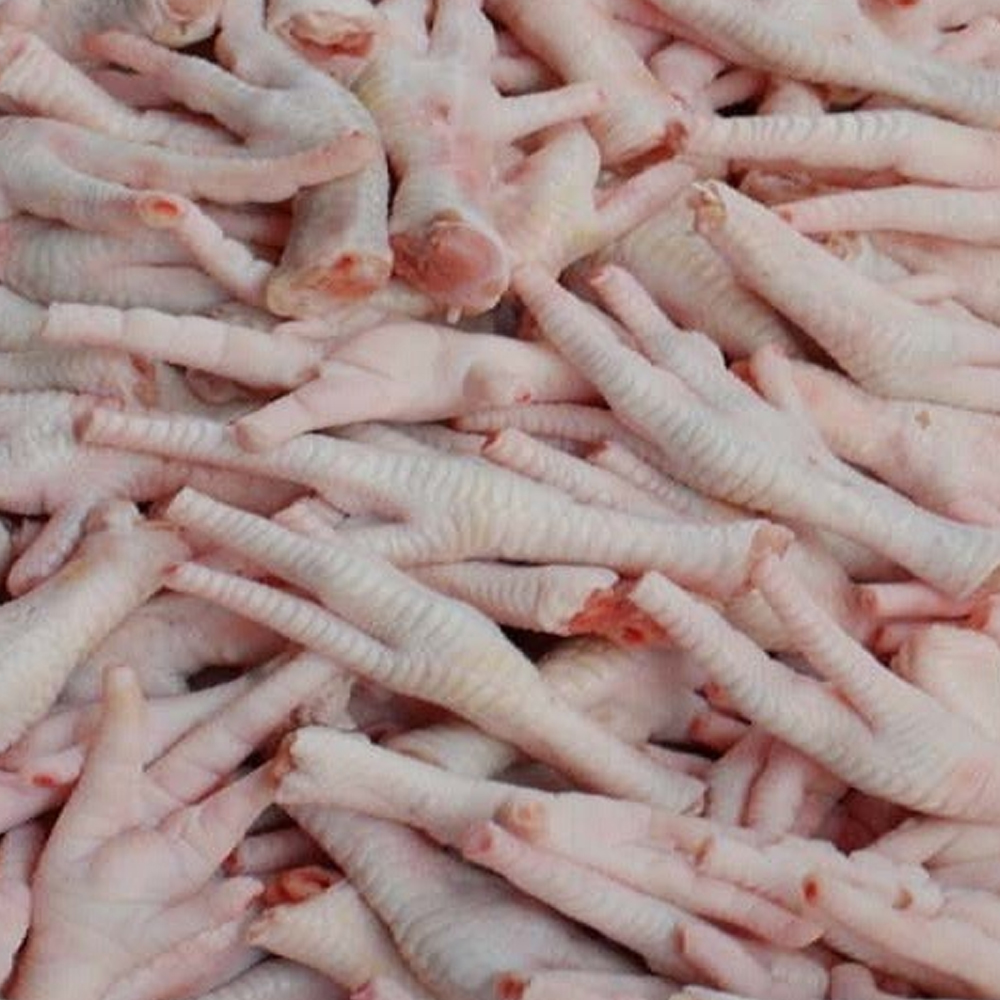
3. What Are Frozen Chicken Paws and Chicken Feet?
The terms “chicken paws” and “chicken feet” are used differently in international markets. Some buyers use the terms interchangeably, while others distinguish products based on processing, anatomy, size or market specification.
Therefore, an importer should not assume that every supplier offering “frozen chicken paws” is offering the exact product required.
A proper specification should clarify:
Product identity
Is the product chicken paws, chicken feet or another poultry part?
Processing
Does the product meet the buyer’s requirements for cleaning, preparation and removal of unwanted material?
Size
Is there a defined size or weight range?
Quality classification
Does the supplier use a particular grade or classification system?
Packaging
Are the paws packed in inner bags, cartons or another approved format?
Intended market
Is the product suitable for the importer’s intended use and destination?
The importer should request photographs, specification sheets and documentation where appropriate. How can I find reliable frozen chicken paws exporters from Brazil
4. Buy Chicken Paws Wholesale: What Quantity Should You Order?
Wholesale purchasing can involve pallets, partial loads or full reefer-container shipments. The appropriate quantity depends on the buyer’s sales forecast, storage capacity, cash flow and import regulations.
Factors to consider
- Average monthly sales.
- Number of wholesale customers.
- Minimum order quantity.
- Available cold-storage capacity.
- Transit time.
- Customs clearance time.
- Desired safety stock.
- Product shelf life.
- Seasonal demand.
- Available working capital.
A simple purchasing estimate is:
Target stock = average monthly demand × desired inventory period
For example, if a distributor sells a certain quantity each month, it can estimate the stock required for the expected delivery period. The final order should also account for transportation delays and available storage.
Should I purchase a full container?
A full reefer container may be appropriate for a buyer with established demand and sufficient storage. A smaller order may be more suitable for a new importer testing the market.
The supplier should confirm whether it can provide the requested quantity and loading arrangement.
5. Frozen Chicken Paws Wholesale Pricing: What Determines the Cost?
The wholesale price of frozen chicken paws is not fixed internationally. It can change according to the product specification, origin, supply, demand, freight and commercial terms.
Factors affecting the price include:
Product grade
Different quality classifications may have different commercial values.
Size and weight
A specific size range may command a different price from mixed sizes.
Processing requirements
Additional preparation, cleaning or packaging requirements may affect the quotation.
Quantity
Large orders may offer different commercial terms from small orders.
Packaging
Carton configuration, inner packaging and palletization can influence costs.
Production date and shelf life
The remaining shelf life and production availability may affect purchasing decisions.
Destination
Freight and import costs vary by destination.
Incoterms
FOB, CFR and CIF quotations represent different cost responsibilities.
Currency and freight
Exchange rates and international shipping costs can influence the final landed price.
Import duties
Customs duties, taxes and port fees can affect the total cost.
How to request a price quotation
A professional buyer should provide a complete request:
Please provide your current quotation for Brazilian frozen chicken paws, including product specification, grade, size, cleaning requirements, carton net weight, packaging, minimum order quantity, available quantity, production date, shelf-life information, loading port, destination options, Incoterm, required certificates and estimated lead time. How can I find reliable frozen chicken paws exporters from Brazil
This helps the exporter prepare a more useful offer.
6. FOB, CFR and CIF: Which Price Should Importers Compare?
International buyers should compare quotations using the same commercial basis.
FOB
Under FOB, the seller fulfills the applicable obligations up to the agreed loading point under the relevant Incoterms rules. The buyer generally arranges the main international freight.
CFR
Under CFR, the seller arranges the cost and freight to the named destination port, subject to the applicable Incoterms rules. Insurance is not included as a seller obligation under CFR.
CIF
Under CIF, the seller arranges cost, insurance and freight to the named destination port, subject to the applicable Incoterms rules.
The buyer should confirm exactly what is included in each quotation.
For example, a lower FOB price may not be cheaper overall if the freight, insurance and destination costs are significantly higher.
Compare total landed cost
A simplified calculation is:
Product price + inland transport + export charges + freight + insurance + customs duties + port charges + customs clearance + local transport + cold storage = estimated landed cost
The actual calculation depends on the transaction and destination.
7. Frozen Chicken Paws Quality Grades: What Should Buyers Know?
Quality grades for chicken paws are not necessarily standardized worldwide. A classification used by one exporter or market may not be identical to a classification used elsewhere.
For that reason, buyers should request the supplier’s written definition of the grade.
A product grade may involve characteristics such as:
- Appearance.
- Skin condition.
- Cleanliness.
- Size.
- Weight.
- Processing.
- Nail condition.
- Foreign-material control.
- Product integrity.
- Freezing condition.
- Packaging quality.
Why grade verification matters
Two suppliers may both advertise “premium chicken paws,” but their products may have different specifications.
A buyer should not rely on marketing terminology alone. Instead, ask for measurable or clearly described criteria.
What should a quality specification include?
A useful product specification can state:
Product: Frozen chicken paws
Origin: Brazil
Grade: As defined by the exporter and agreed by the buyer
Size: Agreed range
Processing: Defined cleaning and preparation
Packaging: Agreed carton format
Storage: According to the supplier’s specification and applicable requirements
Shelf life: As declared for the product
Documentation: Applicable export and sanitary documents
Can buyers request samples?
Depending on the supplier and transaction, buyers may request product photographs, specification sheets or samples. Any sample should be representative of the product being offered, and sample-related costs should be agreed in advance.
8. Frozen Chicken Paws Packaging for International Export
Packaging is an important part of international frozen-food procurement.
Frozen chicken paws may be supplied in export cartons, with inner bags or other packaging formats according to the product specification.
The importer should ask for exact packaging details before placing an order. How can I find reliable frozen chicken paws exporters from Brazil
Carton information
Confirm:
- Net weight per carton.
- Gross weight per carton.
- Carton dimensions.
- Number of bags per carton.
- Product weight per inner bag.
- Carton labeling.
- Batch identification.
- Production date.
- Best-before or expiry information.
- Storage instructions.
Pallet information
If the product is palletized, request:
- Cartons per pallet.
- Pallet dimensions.
- Net weight per pallet.
- Gross weight per pallet.
- Pallet material.
- Stretch-wrap or securing method.
- Maximum permitted stacking height.
Container loading
The supplier should provide a loading estimate based on the actual carton dimensions and weight.
Do not assume that a generic number of cartons will fit every reefer container.
9. Frozen Chicken Feet for Sale Wholesale: How to Evaluate Product Availability
Online listings can help buyers discover suppliers, but an online product page does not necessarily confirm current stock.
Before ordering, ask:
- Is the product currently available?
- What is the available quantity?
- What is the production date?
- What is the declared shelf life?
- What is the minimum order quantity?
- Can the exporter supply the required grade?
- What packaging is available?
- What is the production lead time?
- Which export documents can be provided?
- Is the establishment eligible for the destination market?
For large orders, availability should be confirmed in writing.
10. Brazilian Frozen Chicken Paws Exporters: How to Verify Export Capability
A supplier’s ability to sell poultry domestically does not automatically mean it can export the product to your country.
International buyers should confirm the following:
Processing establishment approval
Determine whether the relevant establishment is approved or eligible under the destination country’s applicable system.
Brazilian inspection and export requirements
Verify the relevant Brazilian inspection and export requirements for the product.
Destination-country requirements
Confirm whether the importing country allows the product from the proposed origin and establishment.
Health certification
Determine which veterinary or sanitary certificates are required.
Customs compliance
Work with a customs broker or import specialist to review tariff classification and documentation.
Product labeling
Check the destination-market labeling requirements.
Halal certification
If the buyer or destination requires Halal certification, confirm the applicable requirements and documentation.
Documentation consistency
The legal company, processing establishment, invoices, certificates and shipping documents should be consistent and accurate.
11. Import Requirements for Frozen Chicken Paws
Import requirements differ by country. Frozen chicken paws are animal-origin products, so importers should carefully review veterinary, food-safety and customs rules before purchasing.
Depending on the destination, requirements may include:
- Import permit.
- Approved foreign establishment.
- Veterinary health certificate.
- Commercial invoice.
- Packing list.
- Bill of lading.
- Certificate of origin.
- Customs declaration.
- Product labeling.
- Food-safety documentation.
- Halal certification, where applicable.
- Additional sanitary or inspection documents. How can I find reliable frozen chicken paws exporters from Brazil
Why import approval matters
A shipment can be commercially attractive but still encounter problems if the product or establishment is not eligible for import.
Before signing a purchase contract, the importer should confirm:
- The product is permitted.
- The origin is accepted.
- The establishment is approved where required.
- The exporter can provide the required certificates.
- The shipment meets labeling and customs requirements.
Work with a qualified import professional
A customs broker, veterinary import specialist or competent authority can help clarify the current rules for your destination.
Do not rely on assumptions based on another country’s import process.
12. Frozen Chicken Paws Cold-Chain Requirements
Frozen poultry must be handled appropriately throughout the supply chain.
The cold chain includes:
- Processing.
- Frozen storage.
- Inland transportation.
- Export terminal.
- Reefer-container loading.
- Ocean transportation.
- Import terminal.
- Customs clearance.
- Destination cold storage.
- Wholesale distribution.
What should importers ask?
- What storage temperature is specified?
- How is the product transported?
- What is the reefer-container loading procedure?
- What temperature information is available?
- How is the shipment monitored?
- What cold storage is available at destination?
- What happens if the container is delayed?
The supplier should provide the product’s applicable storage requirements. The buyer should ensure that its logistics partners can maintain appropriate conditions.
13. Shelf Life and Production Date: Important for Bulk Buyers
When purchasing frozen chicken paws internationally, the buyer should confirm the production date and declared shelf life.
This is especially important because international transportation may take time.
Ask for:
- Production date.
- Batch or lot number.
- Declared shelf life.
- Remaining shelf life at shipment.
- Storage requirements.
- Best-before or expiry information.
- Labeling format.
The buyer should agree on any minimum remaining shelf-life requirement before the order is confirmed.
Why this affects wholesale distribution
If a shipment arrives with less remaining shelf life than expected, the importer may face:
- Reduced resale time.
- Inventory pressure.
- Higher storage costs.
- Customer complaints.
- Difficulties meeting contractual specifications.
Clear communication with the supplier can reduce these risks. How can I find reliable frozen chicken paws exporters from Brazil
14. How to Choose Between Brazilian Poultry Exporters
Importers may encounter different types of companies when researching Brazilian poultry supply.
These can include:
- Agricultural cooperatives.
- Poultry processors.
- Integrated food companies.
- Export trading companies.
- Specialized frozen-food distributors.
Each business model may have different strengths.
Agricultural cooperatives
A cooperative may operate across farming, food processing and agricultural supply chains. Buyers should investigate its actual poultry products and export capabilities.
Poultry processors
A processor may offer direct access to specific products and processing specifications.
Export trading companies
A trading company may offer access to several suppliers or origins, depending on its business model.
Specialized frozen-food distributors
A distributor may be useful for certain quantities or product portfolios.
The correct choice depends on your requirements, destination and purchasing volume.
15. Brazilian Supplier Research: Companies to Investigate
International buyers researching Brazilian poultry suppliers may investigate several agricultural and food-industry companies. However, buyers should verify each company’s current product range, official identity, export authorization and destination eligibility.
Aurora Alimentos
Visit Aurora Alimentos to investigate the company and its agricultural and food-production activities. Buyers should confirm whether the specific establishment and product meet their sourcing requirements.
Coopavel
Visit Coopavel to research the cooperative and its food-production activities. Confirm the current availability of chicken paws and the relevant export capabilities before requesting a quotation.
Vibra Agroindustrial
Visit Vibra Agroindustrial to investigate its poultry-related business information. Product eligibility, processing establishment and export documentation should be verified for the intended market.
Bello Alimentos
Visit Bello Alimentos to explore its business information and poultry product offerings. Buyers should confirm current chicken paws availability and destination-market requirements.
Lar Cooperativa Agroindustrial
Visit Lar Cooperativa Agroindustrial to research the cooperative and its agricultural activities. Confirm the exact frozen poultry products available and whether the relevant establishment can meet the intended export requirements.
Zanchetta Alimentos
Visit Zanchetta Alimentos to investigate the company and its product information. Before purchasing, request confirmation of the product specification, establishment details and export eligibility.
Chicken Paws Brazil
Visit Chicken Paws Brazil for a focused resource on frozen chicken paws and related Brazilian frozen poultry products.
These websites are useful starting points for research. They should not be treated as independent proof of current inventory, export authorization or destination-market approval. How can I find reliable frozen chicken paws exporters from Brazil
16. Other Frozen Chicken Products for Wholesale Importers
Importers sourcing chicken paws may also be interested in other poultry cuts. Purchasing multiple products can help wholesalers serve a wider customer base.
Frozen Chicken Leg Quarter
The chicken leg quarter is a popular poultry cut for foodservice and wholesale distribution.
Buyers can investigate Frozen Chicken Leg Quarter for product information and sourcing research.
Frozen Chicken Liver
Chicken liver may be relevant to distributors serving foodservice and traditional food markets.
Review Frozen Chicken Liver for additional product information.
Frozen Chicken Paws
For buyers specifically researching the core product, visit Frozen Chicken Paws.
Frozen Chicken Thigh
Chicken thighs can be useful for distributors looking to expand their frozen poultry range.
Explore Frozen Chicken Thigh for another product category.
A broader poultry product range may help importers create a more diversified offering for wholesalers, restaurants, retailers and foodservice customers.
17. Frozen Pork Products for Importers Expanding Their Product Range
Some frozen-food importers purchase both poultry and pork products. If your business is developing a broader meat distribution portfolio, you may also investigate the following products.
Frozen Pork Hearts
Pork Hearts may be relevant to buyers serving specialty meat markets and foodservice customers.
Frozen Pork Hock
Pork Hock is another product that importers can investigate as part of a wider frozen pork portfolio.
Frozen Pork Kidneys
Buyers looking for additional pork offal products can review Frozen Pork Kidneys.
Frozen Pork Leg
For distributors interested in larger pork cuts, see Frozen Pork Leg.
As with chicken paws, every pork product should be evaluated for specification, packaging, documentation, processing establishment and destination-market eligibility.
18. How to Calculate the Total Landed Cost of Frozen Chicken Paws
The purchase price is only one part of the cost of importing frozen chicken paws.
A useful landed-cost model includes:
| Cost component | What to consider |
|---|---|
| Product price | Price per tonne, carton or agreed unit |
| Inland transport | Movement from processing facility to port |
| Export charges | Applicable origin-side costs |
| Ocean freight | Reefer-container shipping cost |
| Insurance | Coverage where required or selected |
| Customs duties | Tariff classification and destination rates |
| Port charges | Terminal and handling costs |
| Customs clearance | Broker and processing fees |
| Local transport | Delivery to the cold store |
| Cold storage | Receiving and holding costs |
| Inspection | Applicable inspection or testing costs |
| Finance | Payment and financing costs |
The actual amount depends on the destination and transaction structure.
Example of the calculation
If the product price is quoted on an FOB basis, the buyer must add the relevant freight and other costs to estimate the landed price.
If the product is quoted on a CIF basis, the buyer still needs to consider destination charges, customs duties, clearance and local delivery.
The best supplier is the one that provides the strongest overall value, not necessarily the lowest initial quotation.
19. Common Mistakes When Buying Frozen Chicken Paws Wholesale
Mistake 1: Choosing the cheapest supplier without verification
A low price is not useful if the product does not meet the required specification or cannot legally enter the destination.
Mistake 2: Failing to define grade
The word “premium” can mean different things to different suppliers.
Mistake 3: Not confirming carton weight
Incorrect carton information can cause loading and cost calculations to be inaccurate.
Mistake 4: Ignoring remaining shelf life
A buyer should know how much shelf life remains when the product ships.
Mistake 5: Assuming all Brazilian exporters are approved for every country
Export eligibility is destination-specific.
Mistake 6: Comparing different Incoterms
FOB, CFR and CIF prices are not directly comparable without adjusting for included costs.
Mistake 7: Paying without appropriate due diligence
Confirm the legal identity and commercial information before transferring funds.
Mistake 8: Ignoring cold-storage capacity
The importer must have suitable facilities available when the shipment arrives.
Mistake 9: Not requesting a written specification
Verbal agreements can lead to misunderstandings.
Mistake 10: Failing to plan customs clearance
Delays at the destination can increase costs and create cold-chain risks.
20. How to Negotiate a Long-Term Chicken Paws Supply Agreement
For importers with established demand, a long-term relationship with a reliable exporter may provide greater purchasing consistency.
Before negotiating a recurring supply arrangement, evaluate the supplier’s performance and confirm that the required product is available.
A supply agreement may address:
- Product specification.
- Grade.
- Size.
- Packaging.
- Monthly or quarterly quantity.
- Price basis.
- Price review mechanism.
- Production schedule.
- Shipment schedule.
- Minimum remaining shelf life.
- Documentation.
- Inspection.
- Payment terms.
- Claims procedure.
- Applicable contractual terms.
Why long-term supply planning matters
A distributor may need regular stock for customers. A recurring supply arrangement can help coordinate procurement, storage and sales planning.
However, buyers should avoid committing to quantities that exceed their realistic demand or storage capacity.
21. How to Prepare a Professional RFQ for Frozen Chicken Paws
A clear request for quotation saves time and reduces confusion.
Sample RFQ
Subject: Request for Quotation – Brazilian Frozen Chicken Paws Wholesale
Dear Export Sales Team,
We are interested in purchasing frozen chicken paws from Brazil for international wholesale distribution.
Please provide the following information:
- Product name and detailed specification.
- Quality grade and size range.
- Cleaning and processing details.
- Carton net and gross weight.
- Packaging and pallet configuration.
- Minimum order quantity.
- Available quantity.
- Production date and declared shelf life.
- Country of origin.
- Processing establishment and applicable approval information.
- Available veterinary and export documentation.
- Price per agreed unit.
- FOB, CFR or CIF quotation.
- Port of loading.
- Estimated production lead time.
- Container-loading estimate.
- Payment terms.
- Destination-market eligibility.
- Product photographs or specification sheet.
- Validity of the quotation.
Please also confirm whether you can supply the product consistently for future orders.
Kind regards,
[Your Name]
[Company Name]
[Country]
[Contact Details]
This format helps an exporter understand the buyer’s requirements and prepare a more complete commercial offer.
22. FAQ: Frozen Chicken Paws Exporters from Brazil
1. How can I find reliable frozen chicken paws exporters from Brazil?
Begin by researching Brazilian poultry companies and specialized frozen-food exporters. Review their product information, legal identity, processing establishment, export experience and documentation. Request a detailed specification and quotation, then verify that the product and establishment are eligible for your destination market.
2. Where can I buy frozen chicken paws wholesale?
You can investigate direct poultry exporters, meat-processing companies, international trading suppliers and frozen-food distributors. Chicken Paws Brazil is a useful starting point for researching Brazilian frozen chicken paws and related products.
3. Are frozen chicken paws and chicken feet the same?
The terminology varies by market. Some buyers use the terms interchangeably, while others distinguish products according to processing or specification. Always request the supplier’s written product description.
4. What affects frozen chicken paws wholesale prices?
Price can depend on grade, size, origin, quantity, packaging, processing, production date, freight, Incoterms, exchange rates, market conditions and destination costs.
5. How can I request a wholesale quotation?
Send the supplier your product specification, required quantity, packaging requirements, destination port, preferred Incoterm and required documents. Ask for a formal quotation with a validity period.
6. What quality grades are available for frozen chicken paws?
Quality classifications vary among suppliers and markets. Ask the exporter for a written definition of the grade, including size, cleaning, appearance, processing and product-integrity requirements.
7. Can I buy frozen chicken paws by container?
Commercial buyers can investigate reefer-container shipments. The exact quantity depends on carton weight, packaging, loading arrangement, container capacity and applicable weight restrictions.
8. What packaging is used for frozen chicken paws?
Export packaging varies. The product may be supplied in export cartons with inner packaging. Confirm carton weight, dimensions, bags per carton, pallet configuration and labeling before ordering.
9. How do I verify a Brazilian poultry processing establishment?
Request the legal name and relevant inspection or registration information. Check whether the establishment is approved or eligible for the destination market through the applicable official authority.
10. What documents are needed to import frozen chicken paws?
Requirements vary by destination. They may include an import permit, veterinary health certificate, commercial invoice, packing list, bill of lading, certificate of origin and other customs or food-safety documents.
11. Can I import Brazilian chicken paws into any country?
No. Import eligibility depends on the destination country’s rules, product authorization, origin requirements and processing-establishment approval. Verify the requirements before purchasing.
12. How long do frozen chicken paws last?
Shelf life depends on the product, packaging, processing conditions, storage and applicable regulations. Request the supplier’s declared shelf life and confirm the remaining shelf life at shipment.
13. What temperature should frozen chicken paws be stored at?
The buyer should follow the product’s specified storage conditions and applicable food-safety requirements. Confirm the appropriate frozen storage and transportation conditions with the exporter.
14. Can I request a specific size or grade?
You can request a particular size or quality specification. The exporter must confirm whether it can consistently supply that specification.
15. What is the difference between FOB and CIF?
FOB generally covers the seller’s obligations through the agreed loading point, while CIF includes cost, insurance and freight to the named destination port under the applicable Incoterms rules. Compare the full landed cost.
16. Can I buy other poultry products from Brazilian suppliers?
Depending on the supplier and destination eligibility, buyers may investigate chicken leg quarters, chicken liver, chicken thighs and other frozen poultry products.
17. Can I source pork products alongside chicken paws?
Depending on the supplier’s product portfolio and export eligibility, importers may also investigate frozen pork hearts, pork hock, pork kidneys and pork leg.
18. How do I avoid fraudulent frozen chicken exporters?
Verify the legal company identity, processing establishment, documentation, official contact information and bank details. Use appropriate commercial safeguards and do not rely solely on online listings or informal messages.
19. Should I request a sample before buying?
Depending on the transaction, samples, photographs and specification sheets can help evaluate the product. Ensure the sample is representative of the product offered and agree on any costs beforehand.
20. What is the most important thing to confirm before placing an order?
Confirm that the product meets your required specification, the supplier is legitimate, the establishment is eligible for your destination, the documentation is available and the total landed cost supports your business.
23. Final Checklist for Buying Frozen Chicken Paws from Brazil
Before confirming a bulk export purchase, verify the following:
- Exact product name.
- Product specification.
- Quality grade.
- Size or weight range.
- Cleaning and processing requirements.
- Packaging format.
- Carton net weight.
- Carton gross weight.
- Carton dimensions.
- Pallet configuration.
- Production date.
- Declared shelf life.
- Remaining shelf life at shipment.
- Processing establishment.
- Destination-market eligibility.
- Required veterinary certificates.
- Import permit requirements.
- Customs documentation.
- Price and currency.
- Incoterm.
- Port of loading.
- Destination port.
- Freight quotation.
- Minimum order quantity.
- Container-loading plan.
- Production lead time.
- Payment terms.
- Inspection arrangements.
- Claims procedure.
- Cold-storage arrangements.
Conclusion: Build a Reliable Frozen Chicken Paws Import Business
Finding reliable frozen chicken paws exporters from Brazil requires careful supplier research, product verification and import planning. A successful wholesale purchase depends on more than obtaining a competitive quotation. Importers must establish the exact product specification, confirm quality requirements, understand packaging and loading details, verify export documentation and ensure the product is eligible for the destination market.
Brazil is an important country for international poultry sourcing, but buyers should evaluate each exporter and processing establishment individually. A strong supplier relationship should be based on transparent commercial terms, consistent product quality, dependable documentation and effective cold-chain logistics.
To begin your research, visit Chicken Paws Brazil and explore Frozen Chicken Paws. Buyers looking for additional poultry products can investigate Frozen Chicken Leg Quarter, Frozen Chicken Liver and Frozen Chicken Thigh.
For broader supplier research, explore Aurora Alimentos, Coopavel, Vibra Agroindustrial, Bello Alimentos, Lar Cooperativa Agroindustrial and Zanchetta Alimentos.
Importers seeking to expand into frozen pork can also investigate Frozen Pork Hearts, Frozen Pork Hock, Frozen Pork Kidneys and Frozen Pork Leg.
By choosing suppliers carefully, verifying the processing establishment, comparing total landed costs and planning the cold chain properly, international buyers can create a more reliable sourcing strategy for frozen chicken paws and other Brazilian frozen meat products.