

When international buyers ask, “Where can I buy frozen chicken feet and paws wholesale internationally?”, the answer starts with identifying an exporter that can consistently supply the required product specification, quantity, quality, packaging and export documentation.
Frozen chicken feet and chicken paws are important products in international poultry trading, particularly in markets where they are used for food production, traditional cuisine, restaurants, foodservice, wholesale distribution and further processing. For importers, distributors and large-volume buyers, purchasing directly from an experienced poultry exporter can provide better supply visibility and more consistent specifications than buying through multiple intermediaries. Frozen Chicken Paws Export Process: From Processing Plant to International Buyer
Chicken Paws Brazil provides an online destination for buyers researching Brazilian frozen chicken products, including chicken feet and paws and other poultry cuts. Buyers can also learn more about Lar Cooperativa Agroindustrial and its agricultural and food-production activities.
This guide explains how international importers can evaluate frozen chicken feet suppliers, what to ask before placing a wholesale order, how to compare exporters and what documentation should be considered before shipping. Where can I buy frozen chicken feet and paws wholesale
What Are Frozen Chicken Feet and Chicken Paws?
Chicken feet and chicken paws are poultry products consisting primarily of the lower part of the chicken leg and foot. In international trade, terminology can vary between suppliers and markets, so buyers should always confirm the exact product definition before purchasing.
Depending on the exporter and destination market, specifications may cover:
- Chicken feet or chicken paws
- Grade or quality classification
- Size or weight range
- Skin condition
- Nail removal
- Cleaning and processing
- Freezing method
- Packaging format
- Carton weight
- Production date
- Best-before or expiry date
- Country of origin
- Halal requirements where applicable
- Veterinary or sanitary certification
- Approved processing establishment
For this reason, an importer should never purchase simply based on the words “frozen chicken feet.” A professional purchase order should clearly describe the exact product specification.
Where Can I Buy Frozen Chicken Feet and Paws Wholesale Internationally?
The best place to buy frozen chicken feet and paws wholesale internationally is generally a direct poultry exporter, approved processing company or established international trading supplier that can demonstrate its ability to provide consistent product and export documentation.
Brazil is one of the major countries international buyers investigate when sourcing poultry products. Brazilian exporters can serve overseas markets with frozen poultry products, but buyers still need to conduct appropriate supplier due diligence.
For buyers researching Brazilian poultry products, the Chicken Paws Brazil website can be used to explore frozen poultry products and supplier information.
The supplier-selection process should consider more than price. A low quotation is not necessarily the lowest total procurement cost if the supplier has inconsistent weights, poor packaging, insufficient documentation or unreliable shipping schedules.
International sourcing options
Importers can generally source frozen chicken feet through:
- Brazilian poultry exporters
- International poultry trading companies
- Approved meat-processing establishments
- Specialized frozen-food wholesalers
- Regional distributors
- Direct producer-exporter relationships
For large-volume requirements, direct exporter relationships can be particularly useful because buyers can discuss specifications, packaging, production schedules and shipping requirements before concluding a purchase. Where can I buy frozen chicken feet and paws wholesale
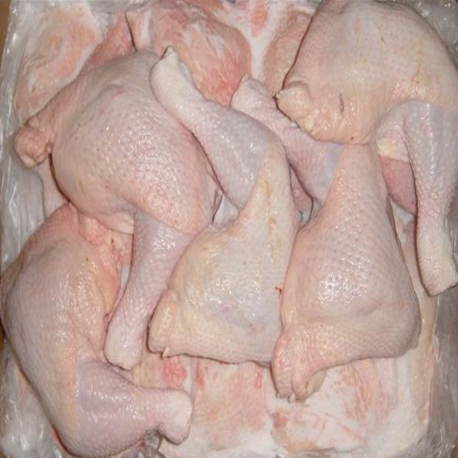
Why Buy Frozen Chicken Feet in Bulk?
Buying frozen chicken feet wholesale can be advantageous for distributors, wholesalers, foodservice companies and importers with established downstream demand.
1. Lower unit procurement costs
Large-volume orders may allow buyers to negotiate more competitive prices than small spot purchases.
2. Better supply planning
A regular supplier can potentially support recurring orders according to agreed purchasing schedules.
3. Container-based logistics
Frozen poultry is commonly transported internationally in temperature-controlled reefer containers. Buyers purchasing at container scale can organize logistics around larger shipments.
4. Consistent specifications
A long-term supplier relationship can help an importer maintain consistent product specifications across multiple shipments.
5. Wholesale distribution
Importers can distribute cartons to regional wholesalers, retailers, restaurants, foodservice operators and other commercial customers.
Frozen Chicken Feet vs. Chicken Paws: What Should Importers Know?
One of the most important steps when sourcing chicken feet internationally is understanding the terminology used by the supplier and buyer.
Some markets commonly use chicken feet, while others use chicken paws. However, the commercial specification can differ even when the names appear similar.
Before confirming an order, ask the exporter to provide:
- Product name
- Product specification
- Product photographs
- Product description
- Average weight or size
- Processing details
- Packaging details
- Frozen condition
- Country of origin
- Applicable certificates
- Available production dates
- Minimum order quantity
If your market requires a particular grade, size or preparation, include those requirements in the inquiry.
How to Find Reliable Frozen Chicken Feet Suppliers
Finding a reliable frozen chicken feet supplier requires a structured sourcing process.
Step 1: Define your product requirements
Before contacting exporters, prepare a purchasing specification.
For example:
Product: Frozen chicken feet/paws
Origin: Brazil or another approved origin
Packaging: Export carton
Quantity: Commercial bulk quantity
Temperature: Frozen
Destination: Importer’s country/port
Required certificates: According to destination-market requirements
Payment: To be negotiated
Shipment: Reefer container
Your actual requirements may be more detailed.
Step 2: Research the exporter
Review the supplier’s website, product range, export experience and company information.
For Brazilian sourcing, buyers can begin their research through Chicken Paws Brazil and Lar Cooperativa Agroindustrial.
Step 3: Request a product specification
Ask for the exact technical specification rather than relying on a general product name.
Step 4: Request commercial terms
The quotation should ideally clarify:
- Price basis
- Currency
- Minimum order quantity
- Carton configuration
- Approximate container loading
- Payment terms
- Production lead time
- Port of loading
- Incoterm
- Documentation
- Validity of quotation
Step 5: Verify the export documentation
Documentation requirements depend on the destination country. Buyers should verify requirements with the relevant government authorities, customs broker and veterinary/import authorities.
Step 6: Confirm logistics
Frozen poultry requires temperature-controlled transportation. Confirm the planned shipping method and reefer-container requirements before signing the purchase contract. Where can I buy frozen chicken feet and paws wholesale
What Should I Ask a Frozen Chicken Feet Exporter?
A professional inquiry should be specific.
You can ask the supplier:
“Please provide your current quotation for frozen chicken feet/paws, including product specification, grade, average weight, carton weight, packaging, minimum order quantity, production date, shelf-life information, country of origin, available certificates, loading port, Incoterm and estimated lead time.”
This gives the exporter enough information to prepare a useful commercial offer.
You should also ask whether the exporter can provide product samples, photographs, packaging information and documentation for your destination market.
What Quality Specifications Should Buyers Check?
Quality is one of the most important considerations when purchasing frozen chicken paws wholesale.
Depending on the market, buyers may evaluate:
Appearance
The product should match the agreed specification and should not contain unacceptable foreign material or obvious signs of poor handling.
Cleaning
Buyers should specify their required level of cleaning and preparation.
Skin condition
Skin integrity can be important depending on the intended use and market.
Nail condition
Some buyers require particular processing specifications concerning the nails.
Size
If the customer requires a particular size range, it should be clearly stated in the purchase specification.
Freezing condition
The product should remain frozen throughout the cold chain according to applicable requirements.
Packaging integrity
Cartons and inner packaging should be suitable for frozen international transportation and storage.
Traceability
Commercial and sanitary documentation should allow the shipment to be traced appropriately.
Why Brazil Is Considered for Frozen Poultry Sourcing
Brazil has a large-scale agricultural and poultry industry and is a significant participant in international meat and poultry trade.
For importers, the attraction of Brazilian sourcing can include:
- Large poultry production capacity
- Established export infrastructure
- Experience with international food markets
- Availability of different poultry cuts
- Developed cold-chain logistics
- Access to major export ports
- Large-scale agricultural supply chains
However, the importer should still verify whether a particular establishment and product are eligible for import into the destination country.
Exploring Other Brazilian Frozen Chicken Products
An importer interested in chicken feet may also require complementary poultry products.
The Frozen Chicken category provides access to additional Brazilian frozen poultry products.
Potential products include:
Frozen Chicken Back
Buyers looking for additional poultry cuts can review Brazil Frozen Chicken Back.
Chicken backs can be used in foodservice, processing and various culinary applications, depending on local demand and regulations.
Frozen Chicken 2-Joint Wing
For importers supplying restaurants, foodservice companies and distributors, Frozen Chicken 2-Joint Wing is another poultry product worth investigating.
Frozen Chicken Breast
Chicken breast is one of the most widely traded poultry cuts. Buyers can review Frozen Chicken Breast when developing a broader frozen poultry sourcing program.
Frozen Chicken 3-Joint Wing
Importers seeking different wing specifications can also examine Frozen Chicken 3-Joint Wing.
Offering several poultry products from an established exporter can potentially simplify procurement for distributors that need mixed product categories.
Can I Buy Chicken Feet by Container?
Yes, frozen chicken feet and paws are commonly considered a bulk international commodity, and commercial buyers may purchase quantities suitable for reefer-container transportation.
The actual loading quantity depends on:
- Carton dimensions
- Net carton weight
- Palletization
- Reefer-container specifications
- Maximum permitted cargo weight
- Destination-country regulations
- Shipping-line limitations
- Whether the container is palletized
- Supplier loading practices
Therefore, importers should not assume a universal number of cartons or tonnes per container.
Ask the supplier for a container loading plan showing the expected number of cartons, net weight and gross weight.
How Much Do Frozen Chicken Feet Cost Wholesale?
There is no single international wholesale price for frozen chicken feet.
The final price can vary according to:
- Origin
- Grade
- Product size
- Quality
- Production date
- Packaging
- Order quantity
- Destination
- Incoterm
- Freight rates
- Exchange rates
- Seasonal supply
- Import regulations
- Payment terms
A professional buyer should therefore request a current quotation rather than relying on an old online price.
For comparison purposes, ask several suppliers to quote using the same specification and Incoterm. Otherwise, a cheaper quotation may simply exclude freight, insurance, export costs or other charges included in a competing offer.
FOB vs. CIF Frozen Chicken Feet Pricing
Importers should understand the difference between common international trade price structures.
FOB
Under FOB, the supplier’s responsibilities generally cover the agreed obligations up to loading at the designated port under the applicable Incoterms rules. The buyer generally arranges the main ocean freight and associated destination costs.
CIF
Under CIF, the seller arranges cost, insurance and freight to the named destination port, subject to the applicable Incoterms rules.
When comparing offers, always make sure the quotation uses the same commercial basis.
For example, comparing a FOB price from Supplier A against a CIF price from Supplier B does not provide a direct price comparison.
What Documents Are Needed to Import Frozen Chicken Feet?
The exact documents depend on the country of destination, origin, product and applicable regulations.
Commercial shipments may involve documents such as:
- Commercial invoice
- Packing list
- Bill of lading
- Health or veterinary certificate
- Certificate of origin
- Export documentation
- Product specification
- Import permit where required
- Customs documentation
- Insurance documentation where applicable
- Halal certificate where required
- Other destination-specific certificates
Importers should verify the current requirements with their country’s competent authorities before purchasing.
A supplier should be able to explain what export documentation it can provide, while the buyer remains responsible for ensuring that the shipment satisfies destination-market import requirements.
How to Verify a Brazilian Poultry Supplier
Supplier verification is an essential part of international purchasing.
Before paying a deposit, investigate:
Company identity
Confirm the legal company name and business details.
Processing establishment
Request information about the facility responsible for processing the product.
Export eligibility
Verify that the establishment and product are eligible for the destination market when the importing country maintains an approved-establishment system.
Product documentation
Ask for the relevant sanitary and commercial documentation.
Previous export experience
A supplier experienced in international trade should understand export documentation, cold-chain requirements and shipping procedures.
Payment details
Ensure that the beneficiary information matches the contracted business entity and use appropriate commercial safeguards.
How to Avoid Problems When Buying Chicken Paws Wholesale
International buyers can reduce procurement risks by avoiding vague purchase agreements.
Your contract should clearly define:
- Product
- Grade
- Specification
- Quantity
- Packaging
- Net weight
- Gross weight
- Price
- Currency
- Incoterm
- Port
- Delivery schedule
- Documentation
- Inspection requirements
- Payment terms
- Claims procedure
- Applicable law and contractual terms
Do not rely solely on WhatsApp messages or informal quotations for large commercial transactions.
Frozen Chicken Feet Packaging for International Export
Packaging plays an important role in maintaining product integrity throughout the cold chain.
Commercial frozen chicken paws may be supplied in export cartons with inner packaging according to the supplier’s product specification.
The buyer should confirm:
- Carton net weight
- Carton gross weight
- Carton dimensions
- Units or bags per carton
- Pallet configuration
- Cartons per pallet
- Pallets per container
- Container loading weight
- Label information
The label should comply with both export and destination-market requirements.
Shelf Life and Storage
Frozen poultry shelf life depends on the specific product, packaging, processing conditions and applicable food regulations.
The exporter should provide the product’s declared shelf-life information and storage conditions.
Buyers should confirm:
- Production date
- Expiry or best-before date
- Recommended storage temperature
- Remaining shelf life at shipment
- Packaging date
- Batch or lot identification
For importers, remaining shelf life is particularly important because international transportation can take weeks from production to final warehouse delivery.
Why Remaining Shelf Life Matters
Imagine an importer purchasing a large frozen shipment but receiving it with significantly less remaining shelf life than expected.
The importer may then face:
- Reduced resale time
- Inventory pressure
- Higher warehouse costs
- Customer complaints
- Difficulty meeting buyer specifications
For this reason, ask the exporter to specify the minimum remaining shelf life at shipment in the commercial agreement whenever this is important to your market.
How to Build a Long-Term Relationship With a Chicken Feet Supplier
A reliable wholesale supplier should be evaluated over multiple shipments rather than one transaction.
Track:
- Product consistency
- Shipment accuracy
- Documentation quality
- Loading performance
- Communication
- Delivery timing
- Packaging condition
- Cold-chain performance
- Claims resolution
- Price stability
If a supplier consistently meets expectations, an importer can consider establishing a recurring purchasing program.
Long-term relationships may also make it easier to discuss customized specifications, shipment schedules and volume requirements.
Frozen Chicken Paws for China, Hong Kong and Asian Markets
Chicken feet and paws are especially relevant to several Asian food markets where poultry feet are widely consumed.
However, importers must not assume that approval in one country automatically means approval in another.
China, Hong Kong, South Korea, Japan and other Asian destinations can have different requirements concerning:
- Approved establishments
- Veterinary certificates
- Product eligibility
- Labeling
- Customs procedures
- Food safety
- Import permits
- Documentation
A buyer should therefore verify the rules applicable to the exact destination before placing an order.
Frozen Chicken Feet for Africa and the Middle East
African and Middle Eastern distributors may also investigate Brazilian frozen poultry as part of their international sourcing strategies.
Commercial buyers should evaluate:
- Local demand
- Import regulations
- Approved suppliers
- Port infrastructure
- Cold storage availability
- Reefer-container costs
- Customs procedures
- Halal requirements where applicable
- Distribution network
A competitive product price is only one component of the total landed cost.
Calculate the Total Landed Cost
When buying frozen chicken feet wholesale, calculate the entire supply-chain cost.
A simplified calculation is:
Product cost + inland transport + export charges + ocean freight + insurance + customs duties + port charges + customs clearance + local transport + cold storage = estimated landed cost
This calculation helps importers compare suppliers more accurately.
For example, Supplier A may offer a lower FOB price, while Supplier B may offer a slightly higher product price but more favorable freight or logistics terms.
The correct comparison is therefore the final landed cost, not simply the supplier’s unit quotation.
What Makes a Good International Chicken Feet Supplier?
A strong exporter should demonstrate several characteristics:
Consistent product
The product supplied should match the agreed specification.
Professional documentation
Export documents should be prepared accurately and on time.
Transparent quotation
The supplier should clearly identify price terms and commercial conditions.
Communication
International frozen-food transactions require prompt communication because production and shipping schedules are time-sensitive.
Export capability
The supplier should understand the documentation and logistics involved in international shipments.
Traceability
Product batches should be appropriately identifiable.
Long-term reliability
The objective should be consistent supply rather than a one-time transaction.
Why Importers Should Consider More Than One Poultry Product
An importer who already buys chicken feet may find opportunities to consolidate procurement across additional poultry cuts.
For example, a distributor could investigate:
- Frozen chicken feet
- Frozen chicken paws
- Frozen chicken back
- Frozen chicken breast
- Chicken wings
- Other poultry cuts
The Chicken Paws Brazil frozen chicken category provides a useful starting point for exploring multiple products.
This approach can help buyers develop a broader product portfolio rather than depending on one SKU.
Brazilian Frozen Pork Products for Importers
Buyers interested in expanding beyond poultry can also investigate frozen pork products.
Available products to research include Frozen Pork Belly, which can be relevant to wholesalers and foodservice distributors seeking pork products.
Other products include Frozen Pork Bones and Frozen Pork Carcass.
Buyers requiring vacuum-packed pork products can also investigate Frozen Pork Collars Vacuum.
A diversified frozen-meat purchasing program can be particularly relevant for importers serving supermarkets, wholesalers, foodservice companies and regional distributors.
Questions to Ask Before Ordering a Container
Before confirming an international shipment, ask the supplier:
- What is the exact chicken feet/paws specification?
- What grade is available?
- What is the average product size?
- How is the product cleaned and processed?
- What is the carton net weight?
- How many cartons are loaded per container?
- Is palletization available?
- What is the production date?
- What is the declared shelf life?
- What is the required storage temperature?
- What certificates are available?
- Is the establishment eligible for my destination market?
- Which port will be used?
- What Incoterms are available?
- What is the minimum order quantity?
- What is the estimated production lead time?
- What payment terms are available?
- Can you provide a current product specification?
- Can you provide packaging photographs?
- What documents will accompany the shipment?
Getting these questions answered before payment can significantly improve purchasing clarity.
How to Compare Three Frozen Chicken Feet Suppliers
Suppose an importer receives three offers.
Instead of comparing only the price, create a supplier comparison table covering:
| Criteria | Supplier A | Supplier B | Supplier C |
|---|---|---|---|
| Product specification | ✓ | ✓ | ✓ |
| Required grade | ✓ | ✓ | ? |
| Carton weight | ✓ | ✓ | ✓ |
| Shelf life | ✓ | ? | ✓ |
| Export documents | ✓ | ✓ | ? |
| Destination approval | ✓ | ? | ✓ |
| MOQ | ✓ | ✓ | ✓ |
| Lead time | ✓ | ? | ✓ |
| Incoterm | FOB | CIF | FOB |
| Freight quotation | Separate | Included | Separate |
| Payment terms | Review | Review | Review |
The cheapest supplier is not necessarily the best supplier.
The best supplier is usually the one offering the strongest combination of quality, compliance, reliability, logistics and total landed cost.
Frequently Asked Questions
Where can I buy frozen chicken feet and paws wholesale internationally?
You can source frozen chicken feet and paws from established poultry exporters, processing companies and international frozen-food suppliers. Brazilian exporters are one sourcing option for importers investigating large-volume poultry supplies. Buyers can begin by researching Chicken Paws Brazil and Lar Cooperativa Agroindustrial.
What is the difference between chicken feet and chicken paws?
The terminology varies by market and supplier. Importers should request a detailed product specification instead of assuming that “feet” and “paws” always refer to exactly the same commercial preparation.
Can I buy frozen chicken feet by container?
Yes. Commercial importers can purchase frozen chicken feet in quantities suitable for reefer-container shipments. The exact number of cartons and tonnes depends on the packaging, container restrictions and loading configuration.
How much do frozen chicken feet cost wholesale?
Wholesale prices vary according to origin, grade, specification, quantity, destination, freight, Incoterms and market conditions. Request a current quotation based on your exact specification and compare offers using the same Incoterm.
What packaging is used for frozen chicken feet?
Export packaging varies by supplier and specification. Common commercial formats involve frozen product packed into export cartons, sometimes with inner bags. Confirm the exact carton weight, dimensions and pallet configuration before ordering.
What documents are required to import chicken feet?
Requirements depend on the destination country. Commercial and sanitary documents may include invoices, packing lists, bills of lading, veterinary or health certificates, certificates of origin and destination-specific import documentation.
How do I verify a poultry exporter?
Check the company’s legal identity, processing establishment, export eligibility, documentation, product specifications, international trading experience and references. For regulated markets, confirm establishment approval with the relevant authority.
Can I request a specific chicken paws specification?
Yes, buyers should communicate the required grade, size, cleaning, packaging and other specifications before receiving the quotation.
Is Brazil a good source for frozen chicken feet?
Brazil is a major poultry-producing and exporting country and is an important sourcing origin for international poultry buyers. However, buyers should verify the eligibility of the specific product and establishment for their destination market.
Can I buy other frozen chicken products from the same supplier?
Depending on supplier availability, buyers may be able to source several poultry cuts. The frozen chicken product category includes products such as chicken back, chicken wings and chicken breast.
Can I buy frozen pork products as well?
Some international suppliers offer both poultry and pork products. Buyers can investigate frozen pork belly, pork bones, pork carcass and vacuum-packed pork collars through the relevant product pages.
What is the best way to get a wholesale quotation?
Send the supplier a detailed inquiry specifying the product, grade, quantity, packaging, destination port and preferred Incoterm. Ask for the current price, lead time, documentation and container-loading details.
Should I buy directly from an exporter or through a trader?
Both models can work. Direct exporters may be advantageous for large recurring volumes, while established trading companies can sometimes provide access to multiple origins and products. Evaluate the supplier based on reliability, compliance, price and service.
Final Buying Checklist for International Importers
Before placing a wholesale frozen chicken feet order, make sure you have confirmed:
- Product name
- Chicken feet or paws specification
- Grade
- Size
- Processing requirements
- Packaging
- Carton net weight
- Carton gross weight
- Pallet configuration
- Container loading estimate
- Production date
- Shelf life
- Storage conditions
- Country of origin
- Processing establishment
- Destination-market eligibility
- Health/veterinary documentation
- Certificate requirements
- Price
- Currency
- Incoterm
- Port of loading
- Destination port
- Freight
- Payment terms
- Lead time
- Inspection requirements
- Claims procedure
Start Your Frozen Poultry Sourcing Research
For buyers searching where can I buy frozen chicken feet and paws wholesale internationally, the most important step is to focus on supplier reliability and product compliance rather than choosing a supplier solely because of a low advertised price.
Brazil offers an established agricultural and poultry supply chain, making it an important origin for importers researching frozen chicken products. Buyers should investigate the exact product specification, processing establishment, export eligibility, documentation, packaging and logistics before completing a transaction.
To explore the supplier and available products, visit Chicken Paws Brazil. Buyers can also research Lar Cooperativa Agroindustrial as part of their supplier due-diligence process.
For a broader purchasing program, explore the Frozen Chicken category and related products including Frozen Chicken Back, Frozen Chicken 2-Joint Wing, Frozen Chicken Breast and Frozen Chicken 3-Joint Wing.
International buyers looking to expand their frozen-meat range can additionally review Frozen Pork Belly, Frozen Pork Bones, Frozen Pork Carcass and Frozen Pork Collars Vacuum.
The strongest international sourcing strategy is to establish clear specifications, verify the supplier and processing establishment, confirm destination-market requirements, compare total landed costs and build a long-term relationship with an exporter capable of maintaining consistent quality and supply.